
Last updated November 15, 2026
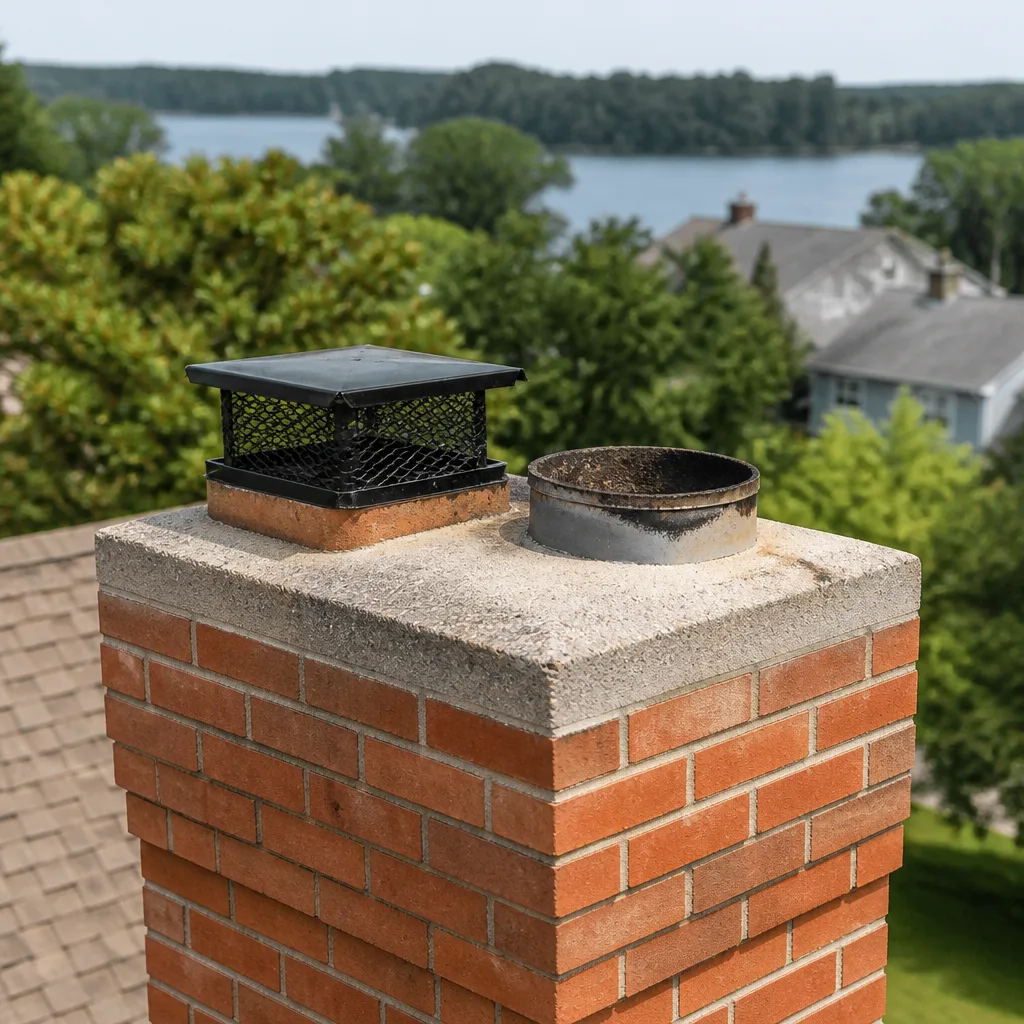 Sweep & inspection
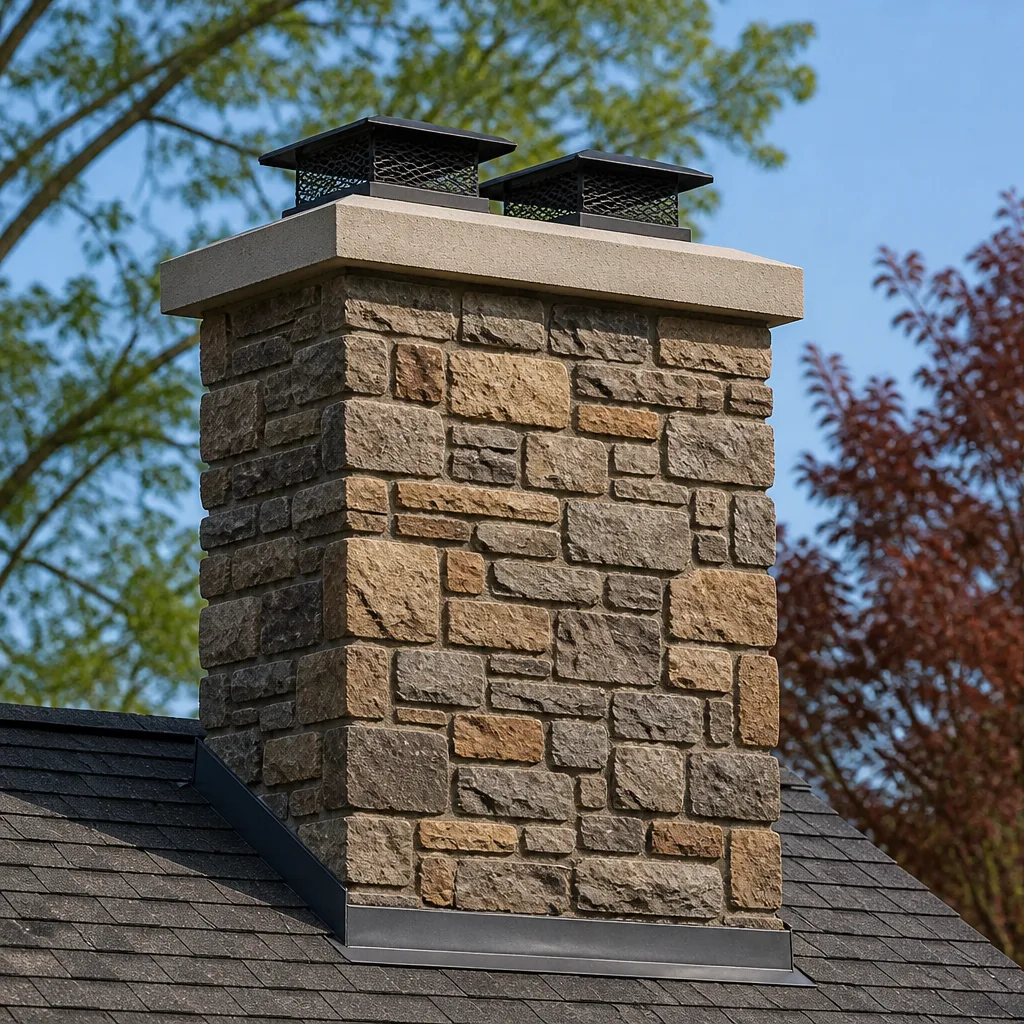 Caps & crowns
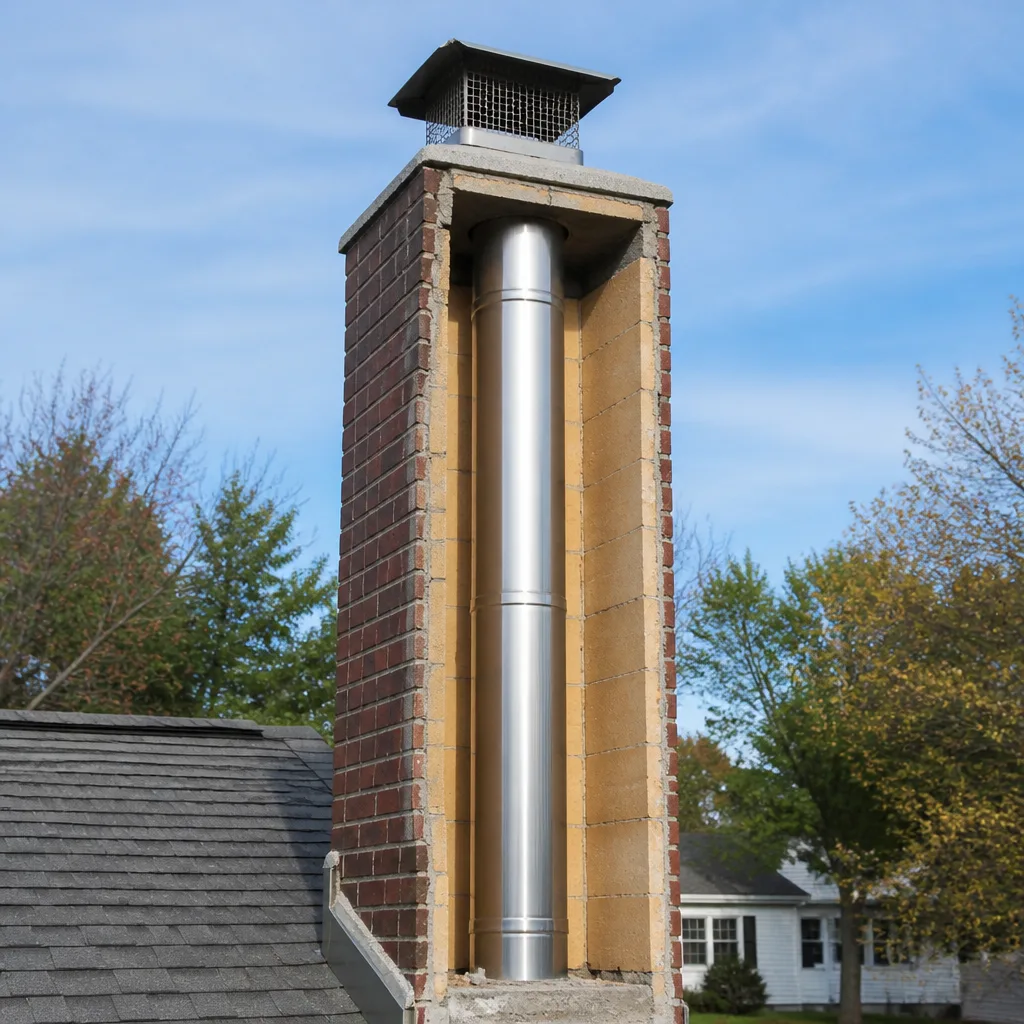 Flue relining
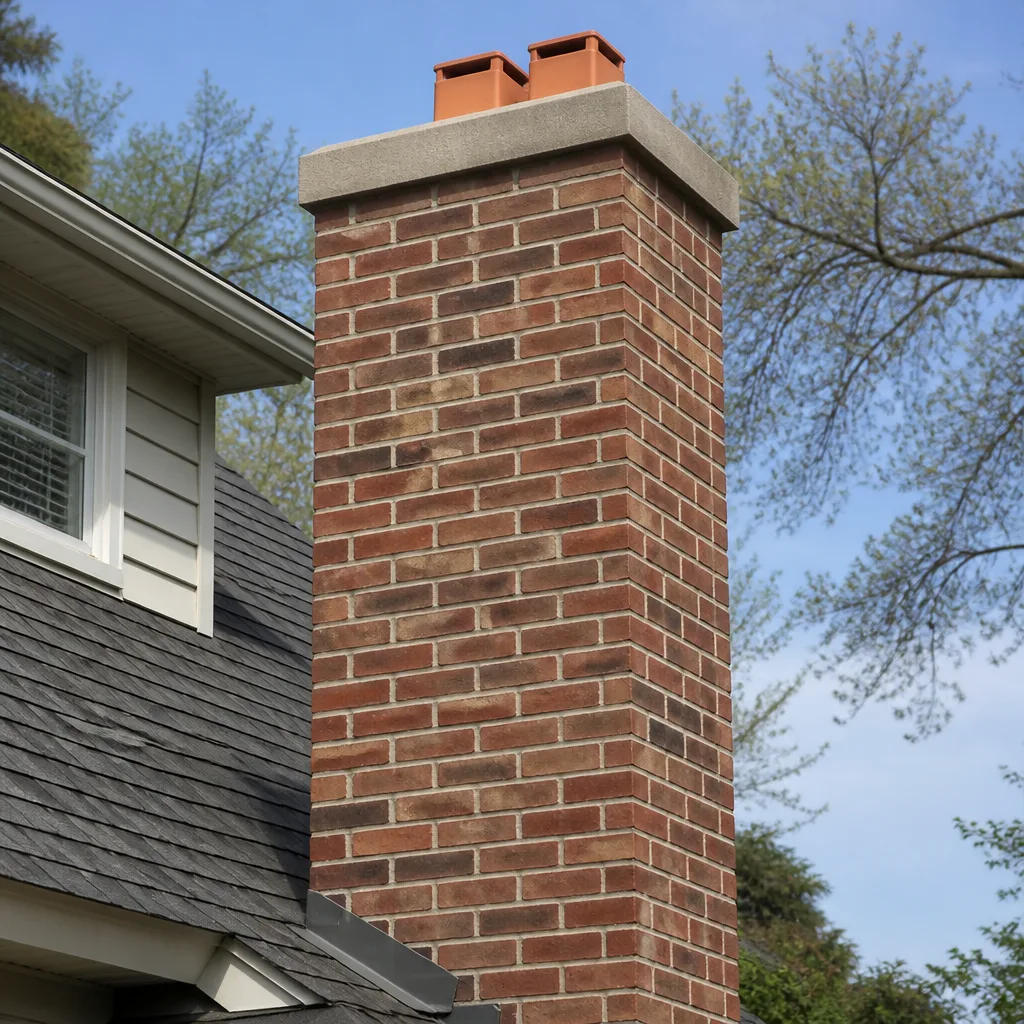 Masonry repair
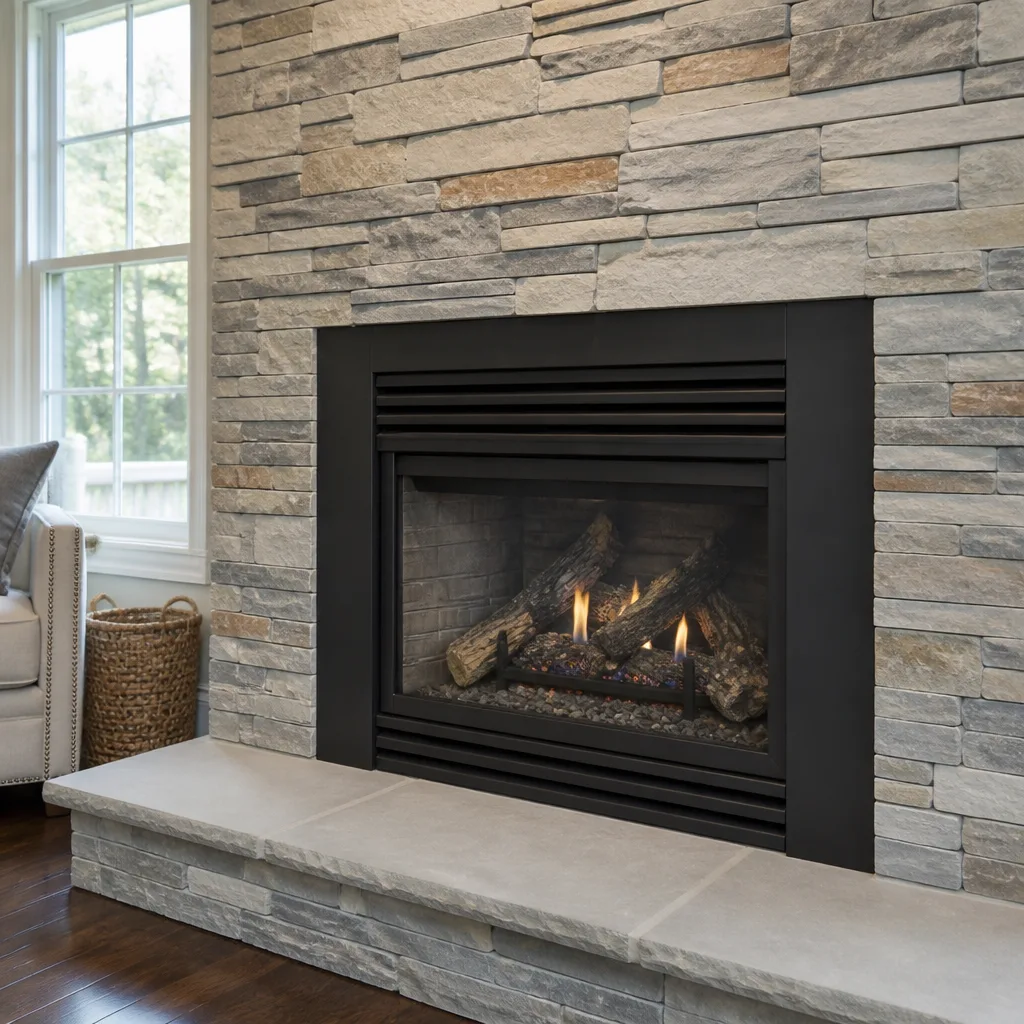 Gas fireplace service
Level 1 sweep and inspection to the NFPA 211 annual standard - flue, crown, cap, and flashing checked and photographed
Chimney sweep logs do not sweep chimneys. They loosen some creosote - which then falls where a brush and vacuum still have to collect it.
Chimney Sweep Troubleshooting in Greensboro: Common Problems and How to Fix Them
If smoke is backing into your living room, the instinct is to call for a cleaning. But a fully clean chimney can still draft backwards. Creosote isn’t always the culprit, and treating it like it is wastes money while the real problem stays right where it was. Most of the “draft problems” and “smoke smells” homeowners in Greensboro try to diagnose on their own trace back to one of four mechanical or structural failures: a blockage, negative air pressure in the house, a flue sized wrong for the appliance, or damage to the liner itself. This guide maps each symptom to its root cause so you stop chasing the wrong fix and know which one calls for a brush, which one calls for relining, and which one needs a professional assessment.
Quick Answer
Smoke entering your home during a fire usually means one of four things: a physical blockage in the flue, negative pressure pulling air down the chimney, a flue that’s too large or too small for the appliance, or a cracked or gaped liner. You can check a few safe things yourself, like whether the damper is fully open and whether the cap is clogged, but anything past that needs a camera inspection. In Greensboro’s humid piedmont climate, moisture compounds all four problems, which is why a proper diagnosis matters more than another cleaning.
Styles & brands we work with
- Sweep & inspection
- Caps & crowns
- Flue relining
- Masonry repair
- Gas fireplace service
Table of Contents
- The Four Failure Modes Behind Almost Every Chimney Problem
- The Cold Flue: Why a Clean Chimney Can Still Smoke
- How Greensboro’s Humid Piedmont Climate Changes Chimney Problems
- Smoke Smell With No Visible Smoke: What It Points To
- Flue Sizing Mismatch: The Overlooked Cause of Poor Draft
- Liner Damage and When Relining Is the Answer
- Your Decision Tree: What to Check Yourself vs. What Needs a Pro
- Common Mistakes to Avoid
The Four Failure Modes Behind Almost Every Chimney Problem
Homeowners describe chimney trouble in symptoms: smoke in the room, a smell that won’t quit, a fire that’s hard to keep going, black staining near the top of the firebox. Those symptoms are useful, but they don’t tell you what’s broken. What does is sorting the trouble into one of four categories, because each one has a different repair path.
- Blockage. Something is physically in the flue: a bird or squirrel nest, a collapsed chunk of mortar, a leaf dam, or heavy creosote buildup narrowing the passage. Symptoms are smoke that rolls out the moment you light a fire, a fire that’s very hard to start, and often a change that came on suddenly.
- Negative air pressure. The house is drawing air down the chimney instead of up. Symptoms are smoke that appears when a bathroom fan, kitchen exhaust, or clothes dryer kicks on, or a fire that burns fine on mild days and misbehaves on windy ones. This is a house problem, not a chimney problem.
- Flue sizing mismatch. The flue is too large or too small for the appliance connected to it. Symptoms are a fire that burns sluggishly, smoke that spills during startup and settles once the flue warms, and a unit that never seems to draw the way it should.
- Liner damage. A cracked clay tile, a gap at a joint, or a rusted-out metal liner. Symptoms are smoke smell with no visible smoke, staining on the chimney exterior, and draft that gets progressively worse over a season.
Sorting which of these you’re dealing with is the whole job. A camera inspection and a draft test do that work in a single visit. Once the failure mode is known, the fix is usually obvious: sweeping for a blockage, a liner repair or reline for damage, a sizing correction, or a ventilation conversation for negative pressure. That’s why we treat sweeping, inspection, and chimney repair as one connected process rather than three separate errands. Skip the diagnosis and you end up paying for a cleaning that never touches the actual problem.
The Cold Flue: Why a Clean Chimney Can Still Smoke
Tightly built modern homes are excellent at holding heat and terrible at letting air in. When a Greensboro house is sealed up for winter, the chimney becomes one of the few openings left, and cold outside air sinks down the flue because the house has no easy way to replace the air it’s using. That’s the cold flue effect, and it’s especially common in newer construction and in homes that have had windows replaced and weatherstripping added.
You can test for it before you assume a blockage. These steps are safe and take a few minutes:
- Open a window a few inches in the same room as the fireplace.
- Light a rolled sheet of newspaper and hold it near the open damper, watching whether the smoke goes up or rolls back into the room.
- If it drafts cleanly with the window open and stalls with it closed, you’re looking at a pressure problem, not a blockage.
- Note whether it happens only on cold, still mornings or after the kitchen exhaust has been running.
If the window test fixes the draft, the next move is a conversation about makeup air: cracking a window during startup, running the exhaust fan less while the fire is settling, or having the house evaluated for a dedicated air supply to the firebox. Fuel-burning appliances need a reliable air source to burn cleanly, and starved combustion produces more creosote and more carbon monoxide risk. A chimney that drafts backwards on cold mornings isn’t dangerous by itself, but it is telling you the house is air-starved. That’s worth taking seriously, and it’s one of the reasons we recommend a camera inspection before assuming a blockage.
How Greensboro’s Humid Piedmont Climate Changes Chimney Problems
Greensboro sits in the humid piedmont, where summers run heavy with moisture and winters swing between damp cold and dry cold without much warning. That pattern does specific things to masonry chimneys, and it makes some problems far more common here than in drier parts of the country.
The big one is spalling mortar. Masonry is porous, and it absorbs moisture from humid air and driven rain, then releases it slowly. When a damp chimney goes through freeze-thaw cycles, water expands inside the brick and mortar and pushes outward. Over seasons, the surface of the brick flakes off and mortar joints crumble. You’ll notice this as gritty sand in the firebox floor, loose material on the smoke shelf, or visible crumbling on the chimney crown. A cracked crown lets water in from the top, which accelerates everything else.
The second is moisture-driven creosote behavior. Creosote forms from unburned wood gases condensing on the flue walls, and humid air combined with a cold flue encourages that condensation to form sooner and stay softer longer. Soft, sticky creosote that never gets hot enough to glaze can still build up heavily, and it’s the kind of fuel that feeds a chimney fire. Combustion that’s starved of air or burning unseasoned wood makes this worse.
Clay tile liners are common in older Greensboro homes, and clay is brittle. Moisture, heat cycling, and a shift in the chimney footing can crack a tile, and a cracked tile lets heat and gases reach the masonry around it. That’s the pathway to a liner failure. This is why we lean on flexible stainless liners like DuraFlex and cast-in-place restoration products like HeatShield when a clay liner is compromised. They handle moisture movement and thermal cycling differently than rigid clay, and they’re the right material for a repair that has to hold up in a piedmont climate.
Smoke Smell With No Visible Smoke: What It Points To
A cold fireplace that smells like smoke, especially on damp days or in the warmer months when you’re not burning, is almost never a cleaning problem. It’s a seal problem. The two most common culprits are a damper that doesn’t close tightly and a gap somewhere in the liner system that lets flue gases migrate into the house through the chimney structure.
Think about how the smell gets into the room. Flue gases are lighter than cool room air and want to rise out the top of the chimney. When the fire is out, the damper is closed, and there’s no draft, those residual gases sit in the flue. If the damper blade is warped, the frame is rusted, or the damper doesn’t seat fully, they leak past it. If the flue has a gap or the liner has separated from its connection at the top plate or the firebox, gases can move into the chimney chase and find their way into the attic or living space. That smell has a source, and tracking it down requires looking inside the flue, not scrubbing it.
What you can safely check yourself:
- Open the damper and look at it with a flashlight. Does the blade close flush against its frame, or is there a visible gap?
- Look for rust, warping, or heavy creosote buildup on the damper blade.
- Check for black staining on the face of the chimney above the firebox or on the exterior masonry.
- Confirm the cap is intact and the spark screen isn’t clogged with debris.
What you shouldn’t do is reach up into the firebox throat or try to inspect the flue by hand. That area sees creosote, and creosote is what feeds chimney fires. A camera inspection gives you a real look at the liner joints, the damper seat, and the top of the flue, and it’s the only reliable way to find a gap that’s letting smoke smell into the house. Once the source is identified, the fix is often a damper repair or a relining job with a stainless system like DuraFlex. If a liner gap is the cause, no amount of sweeping will close it.
Flue Sizing Mismatch: The Overlooked Cause of Poor Draft
Here’s a mistake a lot of homeowners make without knowing it: adding a fireplace insert or a new appliance to an existing chimney without checking whether the flue size matches. A flue that’s too large for the appliance lets flue gases slow down and cool before they exit, which reduces draft and encourages creosote. A flue that’s too small chokes the appliance, and you get spillage during startup and a fire that never reaches temperature.
The rule of thumb isn’t a single number; it’s that the flue has to be sized to the appliance’s venting requirements. When a wood insert is installed, the appliance manufacturer specifies a vent size, and the chimney either meets it or gets a liner sized to match. That’s why so many insert installations in older Greensboro homes end up needing a dedicated stainless liner. The original clay flue was sized for an open fireplace, which is a completely different animal. A properly sized liner, whether it’s an Olympia Chimney system or a DuraFlex flexible liner, gives the appliance the draft it was designed for and keeps gases moving up and out.
Symptoms of a sizing mismatch include a unit that fires unevenly, smoke that rolls out at startup and then stops, glass that soots up quickly on an insert, and a flue that stays cold at the top. If the appliance is new and the draft problems started with it, sizing is the first thing to rule out. If the appliance is old and the problems are new, the answer is often a liner that’s degraded rather than a sizing problem. The camera inspection distinguishes between them.
Liner Damage and When Relining Is the Answer
The liner is the flue’s protective skin. It carries flue gases up and out, and it keeps the heat they carry away from the combustibles and masonry around it. In a clay tile chimney, the liner is a series of stacked tiles with mortar joints. In a metal chimney, it’s a stainless tube, often with an insulation wrap. Both fail in known ways.
Clay tile fails through cracking, spalling, and joint separation. The signs are horizontal cracks across a tile, missing chunks at a joint, and mortar debris collecting on the smoke shelf. A single cracked tile can be a real problem because heat and carbon monoxide can pass through it into the chimney’s interior. Metal liners fail through rust at the joints, separation of sections, and crushed or collapsed runs after a chimney fire.
Relining is the answer when:
- A clay tile liner is cracked, spalled, or has separated joints.
- The flue is unlined, which is common in very old chimneys.
- A new appliance needs a properly sized liner.
- The old metal liner has rusted through or separated.
- A chimney fire has warped or damaged the existing liner.
For flexible stainless systems we work with DuraFlex and Olympia Chimney. For cast-in-place restoration, where the goal is to rebuild the flue’s interior surface rather than sleeve it, HeatShield is the material of choice. The right one depends on the shape of the flue and the condition of the masonry, and that’s a decision made from what the camera shows, not from a guess. If you’re not sure whether your chimney needs a reline or a sweep, a proper chimney repair assessment will tell you, and the camera evidence is yours to see before any work is booked.
Your Decision Tree: What to Check Yourself vs. What Needs a Pro
Some observable issues are safe to check yourself. Others are dangerous. Here’s where the line falls.
Safe to check on your own:
- Whether the damper opens and closes fully and seals against its frame.
- Whether the chimney cap is intact and the spark screen is clear.
- Whether the death of a fire changes when a bathroom fan or dryer runs.
- Whether smoke goes up the flue when you hold a newspaper near the open damper.
- Visible exterior signs: cracked crown, missing mortar joints, staining.
Requires a professional assessment:
- Anything inside the flue past the damper. That area holds creosote, and creosote is flammable.
- Any sign of a crack, gap, or damaged liner, which calls for a camera inspection.
- Exterior masonry that’s spalling, loose, or moving. Chimney structure can be genuinely unstable, and working on it from a roof is a height and fall risk.
- Any gas or oil appliance venting, because an improperly vented fuel-burning appliance can produce carbon monoxide.
- Wiring or an electrical component in the chimney system.
If your check turns up anything in the second list, stop there and get an assessment. When you’re ready to book a chimney sweep, we’ll bring the camera and the draft test and walk you through what we see. The goal is for you to know which failure mode you’re dealing with before anyone recommends a repair.
Common Mistakes to Avoid
- Assuming a bad draft means a dirty flue. A clean chimney can smoke from negative pressure, a cold flue, or a sizing mismatch, and sweeping it again won’t help. Test the window trick first, then call for an inspection.
- Burning unseasoned wood to save money. Green wood produces more creosote and more water vapor, which is the worst combination in Greensboro’s humid climate. Season firewood before you burn it, and keep it dry.
- Ignoring a smoky smell in the summer. That smell usually points to a damper that isn’t sealing or a gap in the liner, and it’s telling you something is open that should be closed. Get the camera on it before the heating season starts.
- Hiring a sweep with no camera. If the sweep can’t show you the inside of the flue, you have no way to know whether the liner is intact. A photo report is the evidence you need to decide whether a reline is real or a sales pitch.
- Putting off spalling mortar repair. Crumbling mortar and a cracked crown let water into the chimney structure, and water damage doesn’t arrest itself. A small masonry repair now is cheaper than a rebuild later.
- Running a new insert on the old open-fireplace flue. The flue size was never right for the appliance, and the result is poor draft and accelerated creosote. Make sure the liner is sized to the appliance before the first fire.
- Trying to fix a clay tile crack with a surface product. Smearing sealant on a cracked tile doesn’t restore the liner, and it hides the problem from the next inspection. Relining is the durable answer.
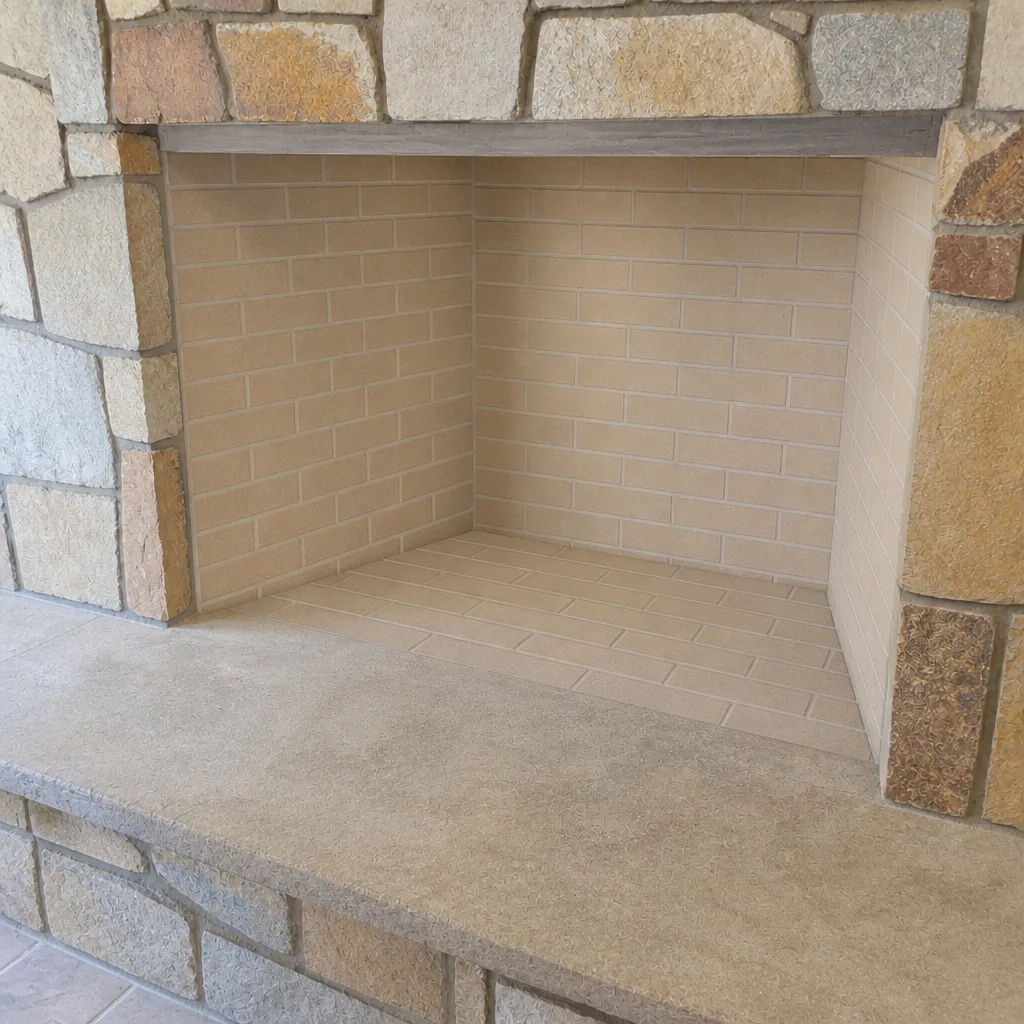
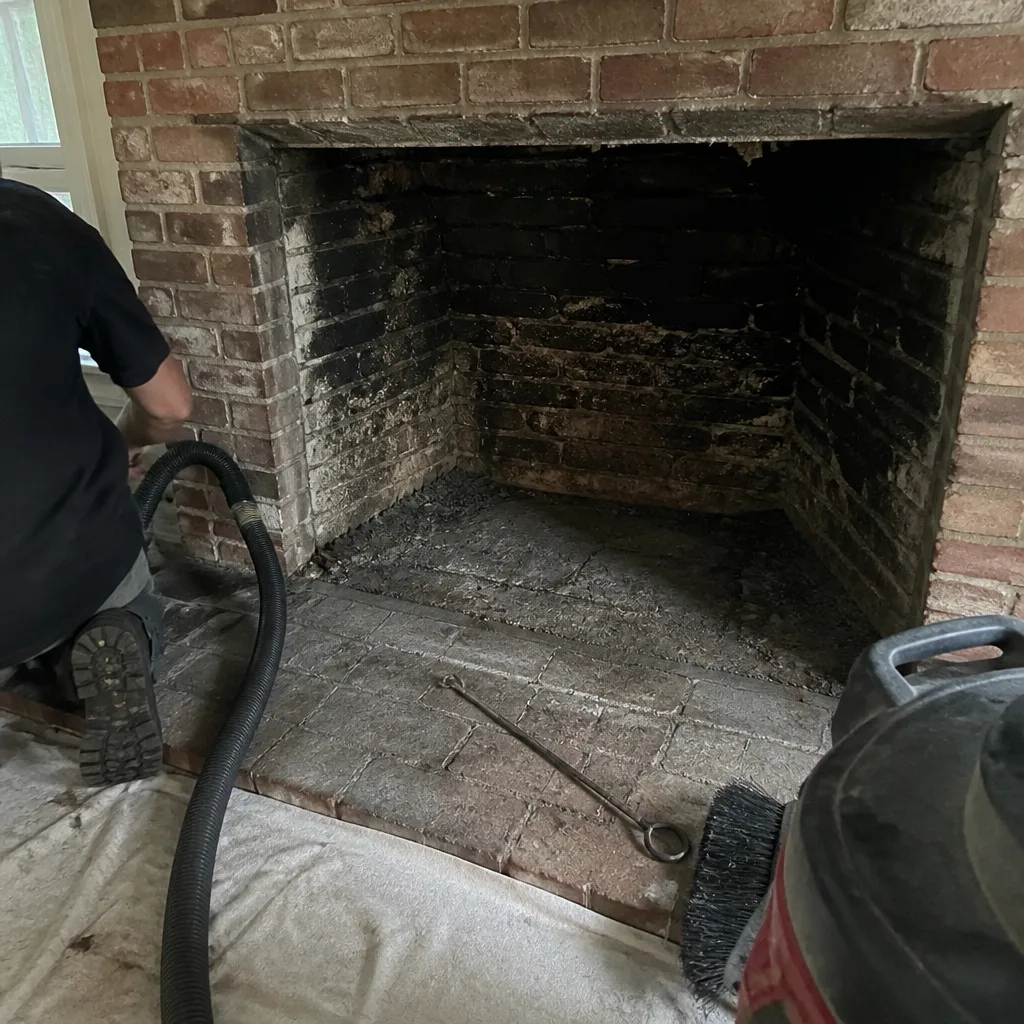
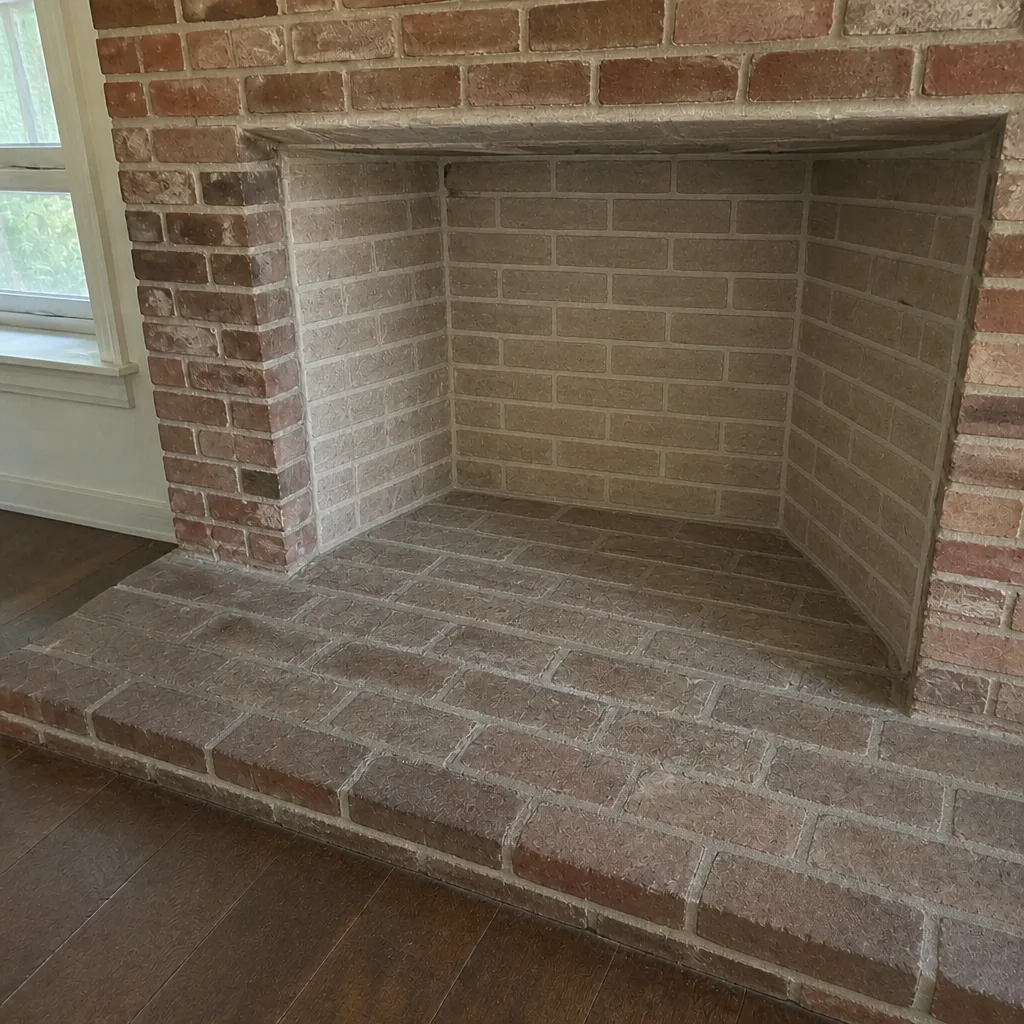
See the difference
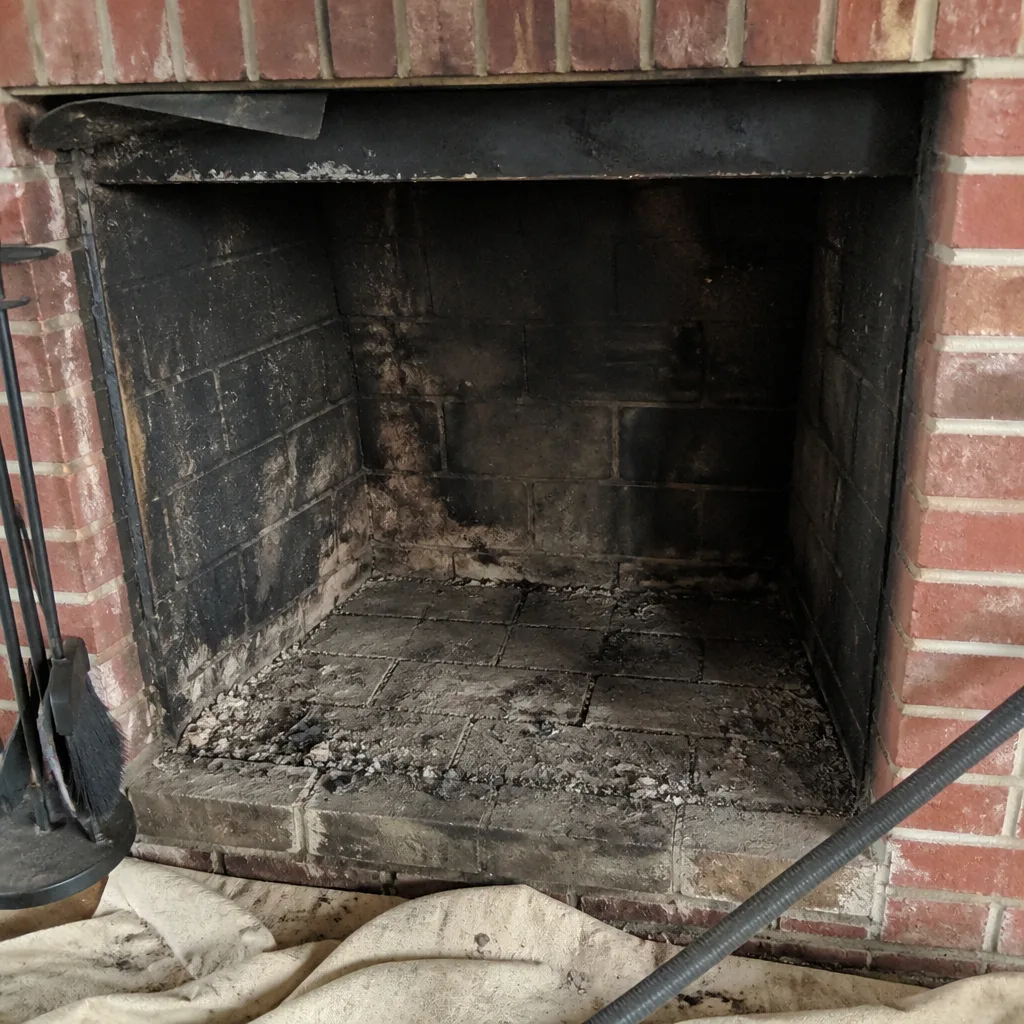 Before
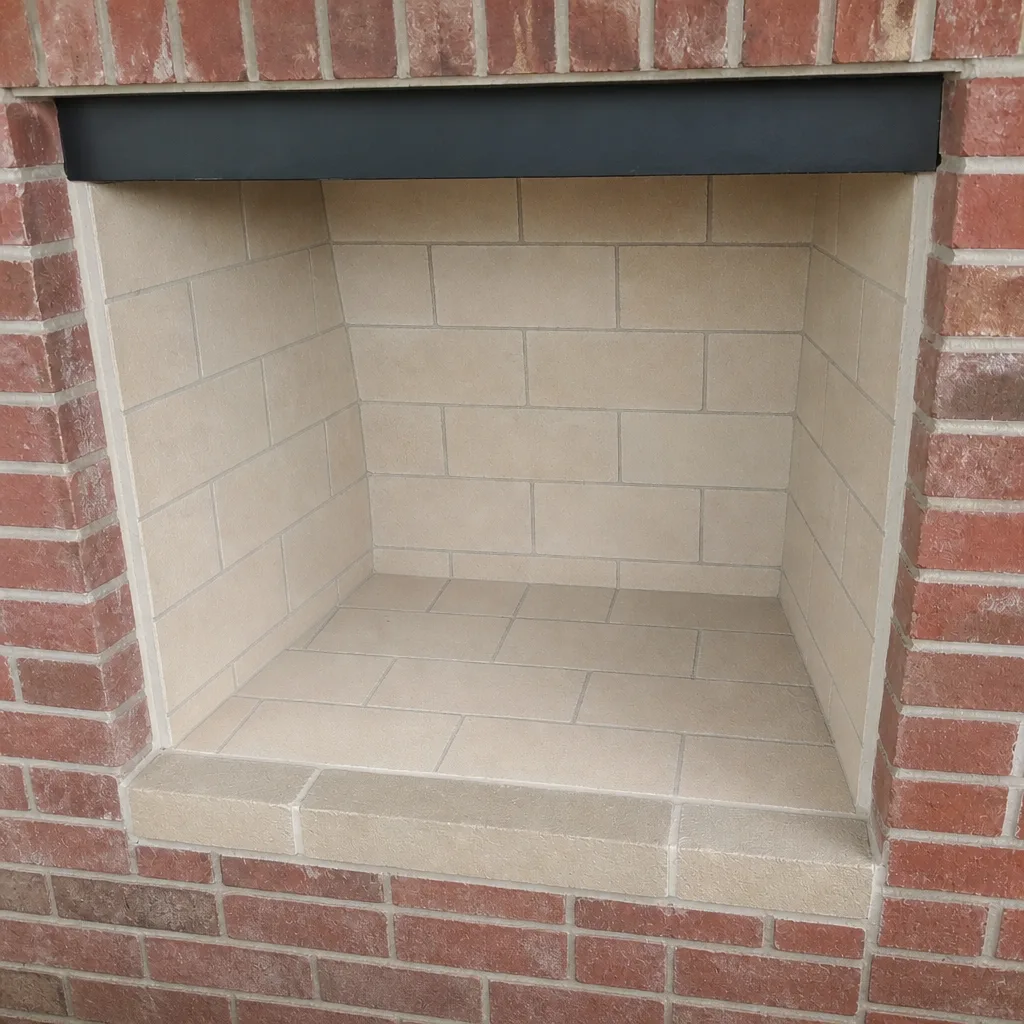 After
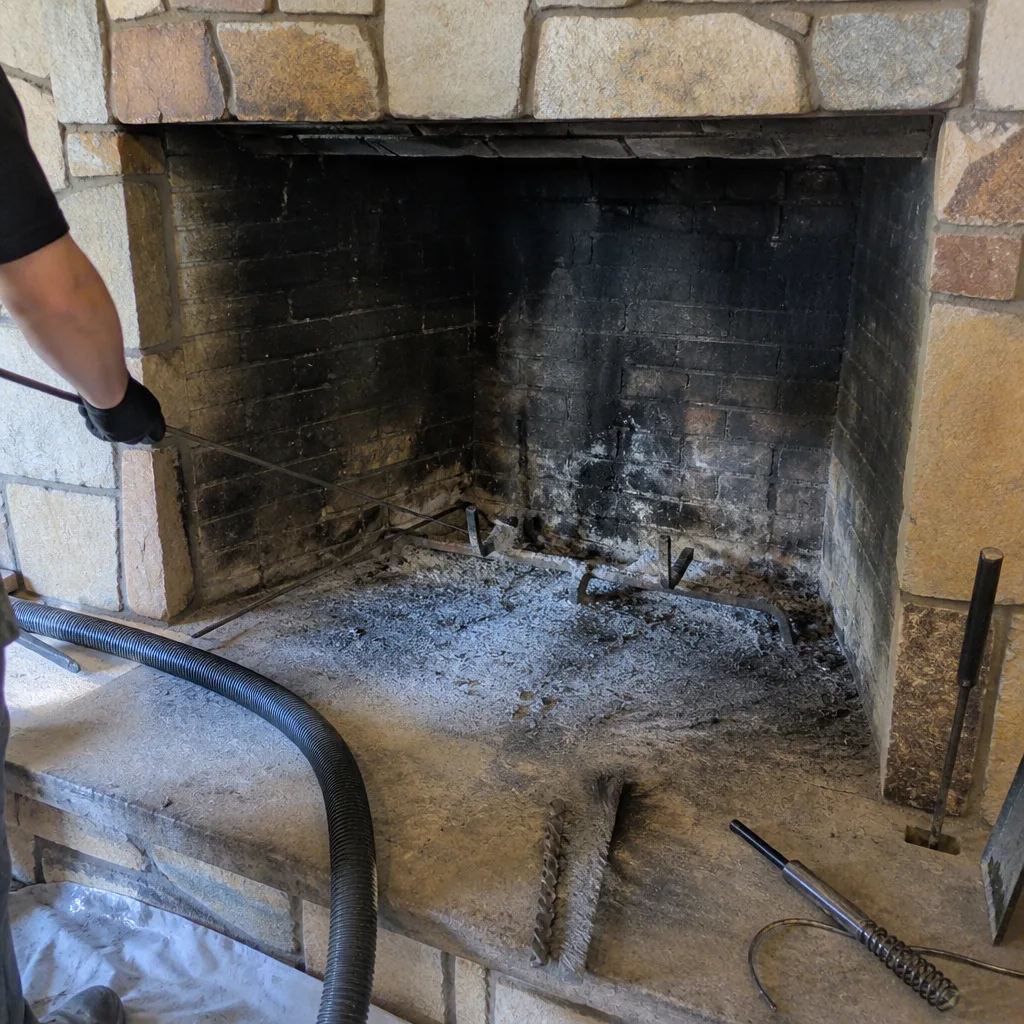 Before
 After
 Before
 After
When to Call a Professional
Call a professional when smoke enters the room during a fire, when you smell smoke with no visible smoke, when you see a crack or gap in the liner, when exterior masonry is spalling or loose, or when you’ve had a chimney fire. Also call before you use a newly installed insert or appliance, and before the heating season if it’s been more than a year since the chimney was inspected. These are the scenarios where the answer depends on what a camera finds, and guessing costs money and safety. Our technicians have up to 11 years of experience with chimney systems, and we work from camera evidence rather than assumption. Greensboro Chimney Cleaning offers free estimates in Greensboro, and you can see the photos before you decide anything. Call (888) 366-5537. We answer 24/7. Fast dispatch from 7am to 7pm, Sunday through Friday.
Frequently Asked Questions
Smoke entering the room usually means one of four things: a blockage in the flue, negative pressure from the house, a flue that’s sized wrong for the appliance, or a damaged liner. Start with the window test; if opening a window nearby fixes the draft, it’s a pressure problem. If it doesn’t, book a camera inspection so the flue can be seen directly. Call (888) 366-5537 for a free estimate, or book an inspection to find the cause.
A clean chimney can still smoke because the problem isn’t creosote. The most common causes are a cold flue in a tightly sealed home, a flue sized too large for the appliance, or negative pressure pulling air down the chimney. A draft test and a camera inspection will separate these, and that’s what we do on an inspection call. Call (888) 366-5537 for a free estimate and we’ll tell you which one you’re dealing with.
A smoky smell with no visible smoke usually points to a damper that isn’t sealing or a gap somewhere in the liner system. Residual flue gases leak past the damper or move through a gap in the liner and reach the living space. Check whether the damper closes flush; if it does and the smell persists, the next step is a camera inspection to find the gap. Call (888) 366-5537 for a free estimate and we’ll pinpoint the source.
Most wood-burning chimneys should be inspected once a year, and swept when the creosote buildup reaches a level that warrants it. Greensboro’s humid climate can accelerate moisture-related creosote and masonry problems, so an annual inspection matters. The inspection tells you whether a sweep is needed rather than guessing. Call (888) 366-5537 for a free estimate, and we’ll check the flue and show you the camera report.
You need a new liner when the camera shows a cracked clay tile, a separated joint, rusted metal, or an unlined flue, and you should be able to see that evidence yourself. We don’t recommend relining without a photo report, and sometimes the honest answer is that a repair can safely wait. When relining is needed, we work with DuraFlex, Olympia Chimney, and HeatShield systems sized to your appliance. Call (888) 366-5537 for a free estimate, and we’ll show you what’s inside your flue.
Skipping an inspection means the liner condition stays unknown, and a cracked tile or gap can let heat and flue gases reach the chimney structure, which raises chimney fire and carbon monoxide risk. The other cost is a slow decline in draft that you notice only when the fire is hard to light. An annual inspection catches problems when they’re small. Call (888) 366-5537 for a free estimate and we’ll tell you what your chimney needs.
The Bottom Line
Most chimney “draft problems” and “smoke smells” aren’t mysteries. They come from one of four failure modes: a blockage, negative pressure, a flue sized wrong for the appliance, or a damaged liner. Greensboro’s humid piedmont climate makes moisture-related issues like spalling mortar and creosote buildup worse, and it makes a cracked clay liner more common than you’d expect. You can safely check the damper, the cap, and the window test. Everything else needs a camera and a trained eye. Once you know the failure mode, the fix is clear, and it’s often smaller than you feared. Call (888) 366-5537. We answer 24/7. Fast dispatch from 7am to 7pm, Sunday through Friday.
If you’d like to understand the full scope of what we do, start with Greensboro Chimney Cleaning. When you’re ready to move forward, we serve homeowners throughout Greensboro and the surrounding area, and we’d be glad to take a look.
Written by the team at Greensboro Chimney Cleaning.