
Last updated November 15, 2026
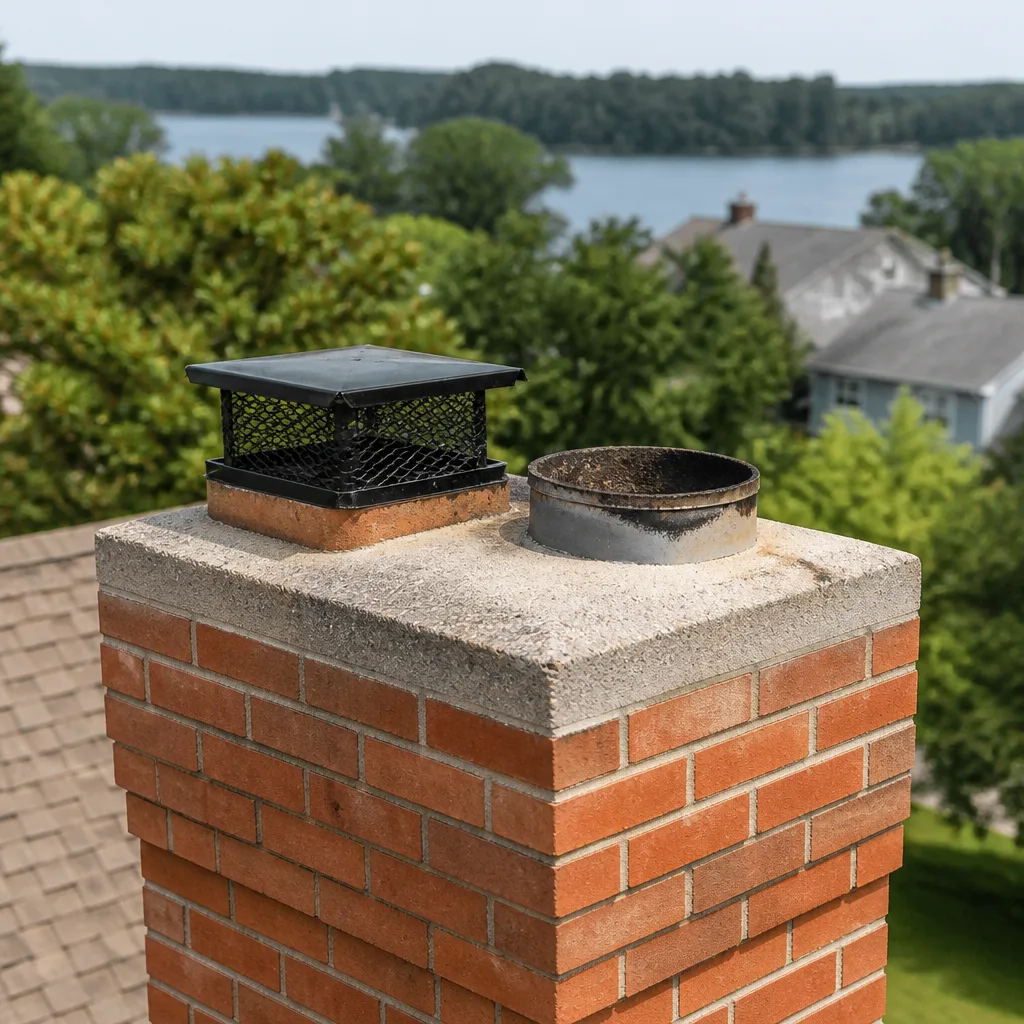 Sweep & inspection
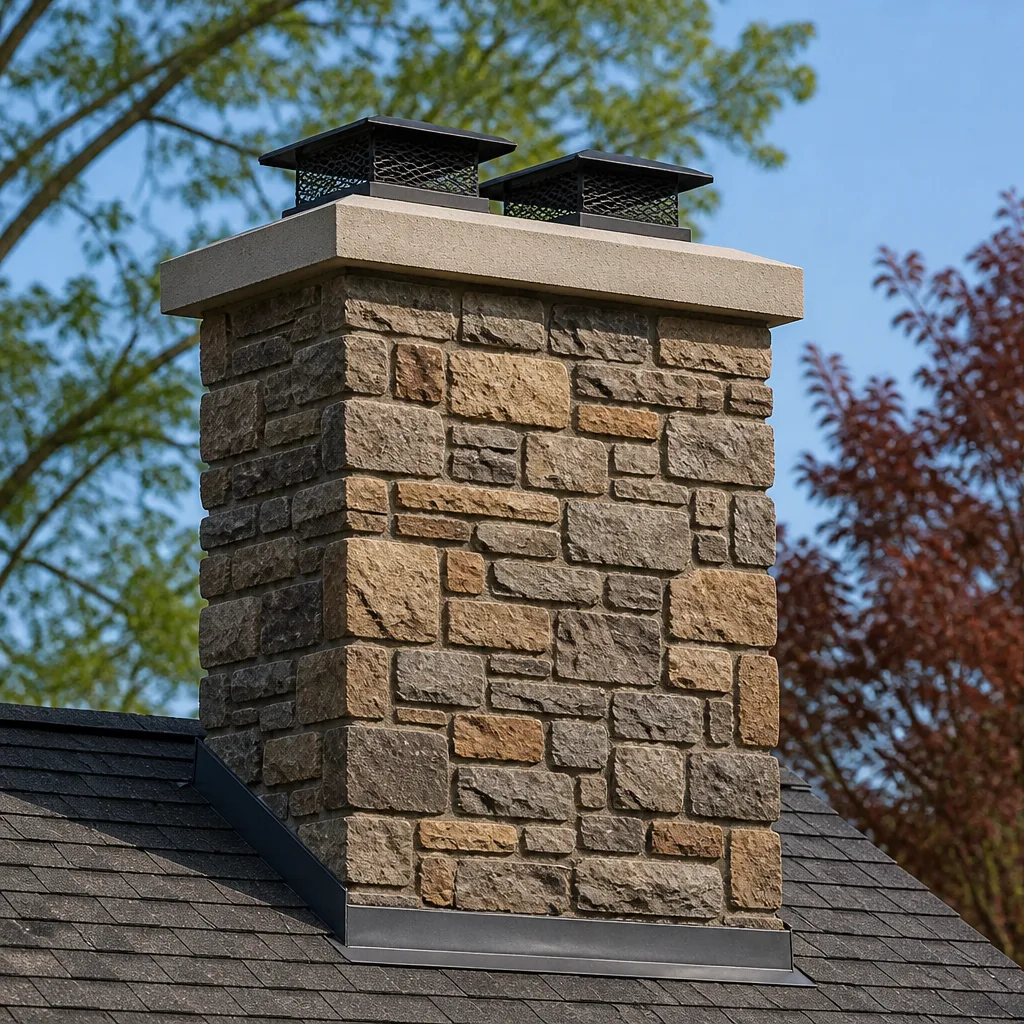 Caps & crowns
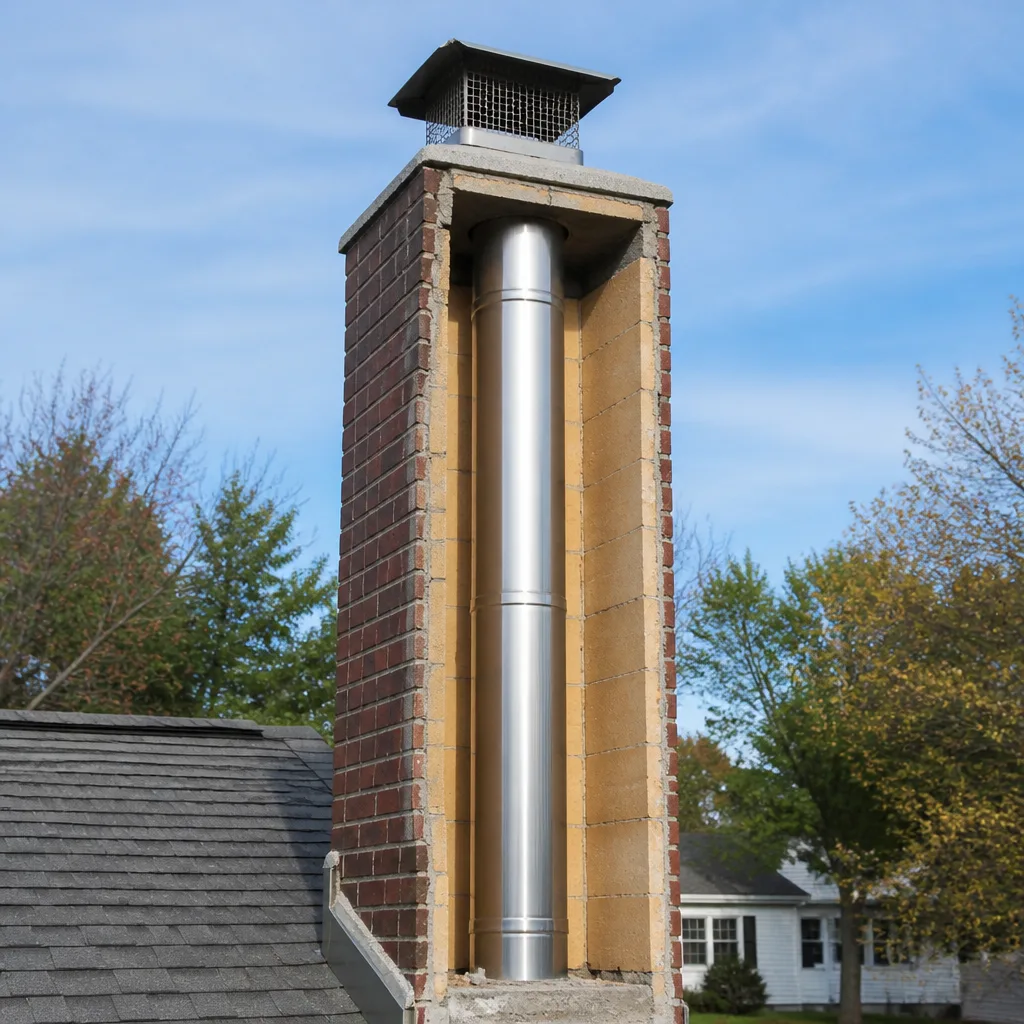 Flue relining
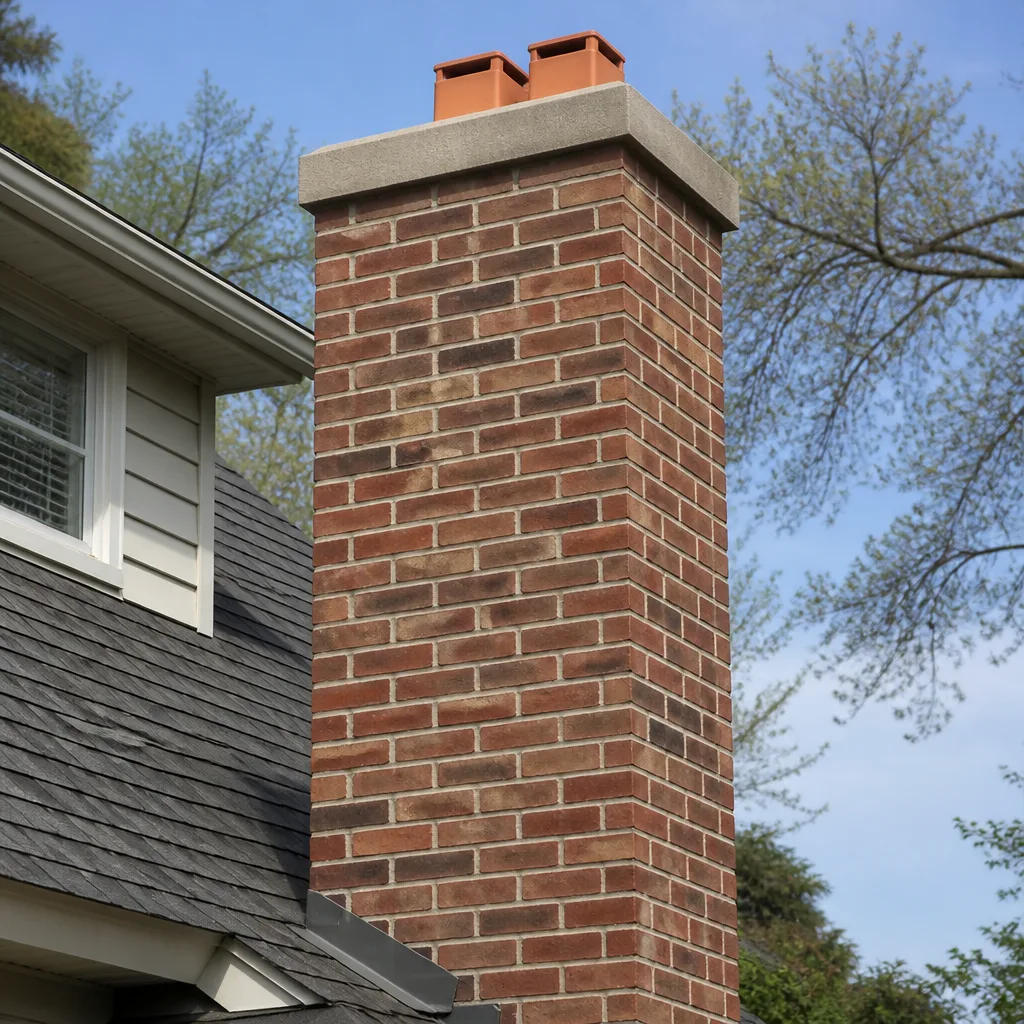 Masonry repair
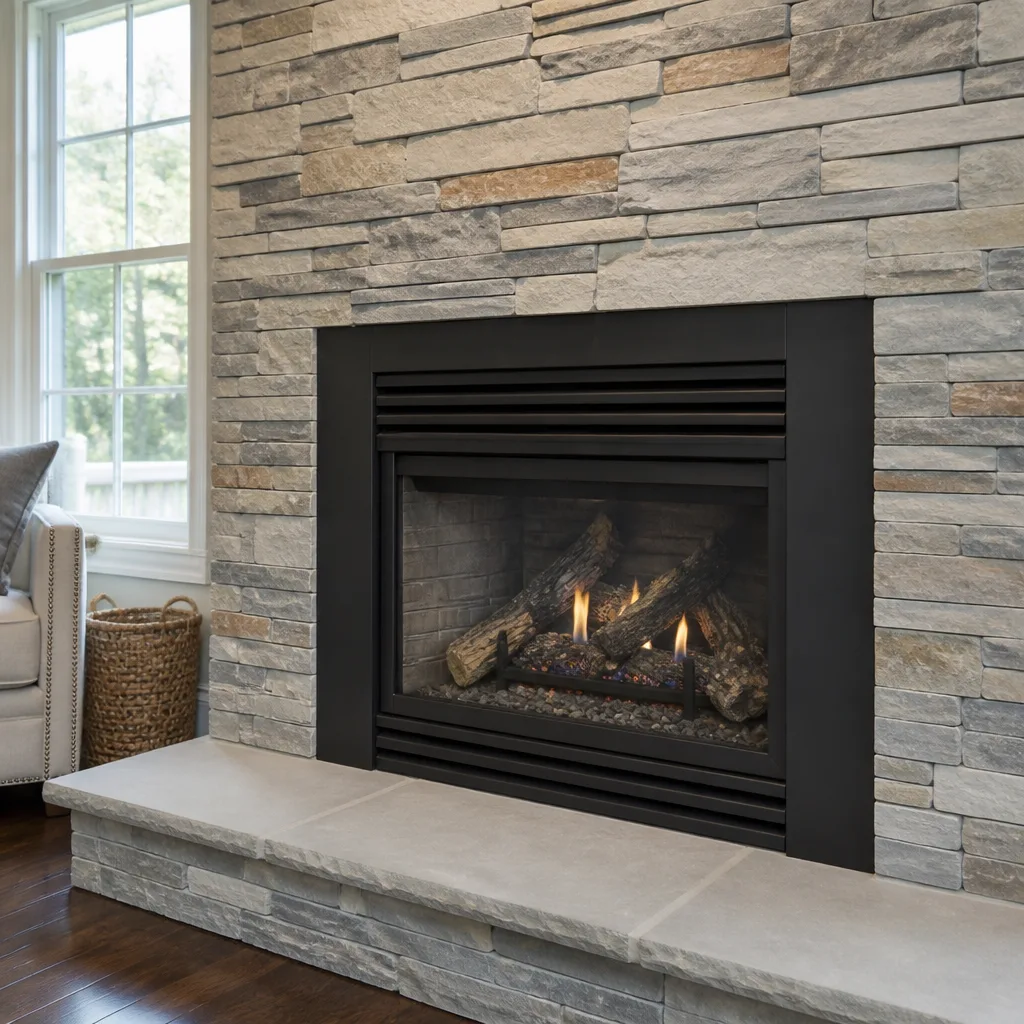 Gas fireplace service
Level 1 sweep and inspection to the NFPA 211 annual standard - flue, crown, cap, and flashing checked and photographed
Chimney sweep logs do not sweep chimneys. They loosen some creosote - which then falls where a brush and vacuum still have to collect it.
DIY vs Professional Chimney Cleaning: The Greensboro Homeowner’s Decision Guide
A chimney brush kit on a hardware store shelf is a real tool. The brushes inside it are the same nylon and polypropylene brushes a sweep uses, and a determined homeowner can absolutely push one up a flue. That’s the part people get right. The part that goes wrong is everything after the brush comes back down. A brush cleans. It doesn’t tell you what it found, whether the liner joints held, whether the smoke chamber is coated, or whether the creosote you couldn’t reach has glazed into something that burns at 2,000 degrees. This guide is about that gap: what DIY can honestly do in a Greensboro home, what it can’t, and how to decide which side of the line you’re on.
Styles & brands we work with
- Sweep & inspection
- Caps & crowns
- Flue relining
- Masonry repair
- Gas fireplace service
Quick Answer
DIY chimney cleaning can remove loose soot and light, fluffy creosote from a straight flue if you have the right brush and know how to use it, but it cannot clean or assess the smoke shelf, smoke chamber, or liner joints, and it produces no documentation. For a Greensboro homeowner burning wood regularly, a professional sweep and inspection is the safer default because the value isn’t in the brushing. It’s in the camera inspection and the written record of what that inspection found.
Table of Contents
- What DIY Chimney Cleaning Actually Accomplishes
- The Parts of Your Chimney You Physically Cannot Reach
- What a Camera Inspection Sees That You Can’t
- When DIY Brushing Is a Reasonable Supplement
- Insurance, Documentation, and the Self-Certification Problem
- The Cost-Benefit Framework for Greensboro Homeowners
- Why Greensboro Chimneys Face Particular Conditions
- Common Mistakes to Avoid
- When to Call a Professional
- Frequently Asked Questions
What DIY Chimney Cleaning Actually Accomplishes
A homeowner with a correctly sized brush, a set of rods, drop cloths, and a shop vacuum can remove a meaningful amount of soot and stage-one creosote from a straight, accessible flue. That’s not nothing. Stage-one creosote is the thin, flaky, dusty deposit that accumulates in the first weeks of burning and brushes off easily. If your flue is straight, your fireplace is a standard open masonry unit, and you’ve burned a cord or two of well-seasoned hardwood over a season, a DIY brushing can knock down the loose material.
What it delivers, concretely:
- Surface soot removal from the flue walls you can reach with the brush.
- Loose flake removal where creosote hasn’t bonded to the masonry.
- A reduction in the odor that comes from soot sitting in a damp flue through a Greensboro summer.
- A basic line-of-sight check from the damper up, and from the roof down, on what the flue looks like.
What it does not deliver: an assessment. Brushing removes material. It doesn’t tell you why the material was there, whether the flue is sized correctly for the appliance, whether a liner joint has separated behind the visible wall, or whether the crown is cracked and letting water into the masonry. Those are separate jobs that happen to share the same visit when a professional does them, which is why the brush is about a tenth of what a real service call involves. The other nine-tenths is looking, measuring, and documenting.
The honest position is this: DIY brushing is a cleaning action. Professional chimney service is a cleaning action plus a diagnostic one. If you only need the first, you can do it. If you need the second, you can’t.
The Parts of Your Chimney You Physically Cannot Reach
Every chimney has components that a brush on a rod will not touch, no matter how carefully you work. This isn’t a matter of skill. It’s geometry. The flue is a straight vertical pipe; the smoke chamber above the damper is a corbelled, sloped cavity that narrows as it rises, and a round brush can’t follow that shape. The smoke shelf is a horizontal ledge at the base of the smoke chamber that collects debris and is nearly impossible to reach from below without specialized tools.
The parts a homeowner can’t access or assess:
- The smoke shelf. A flat ledge behind the damper that catches soot, creosote flakes, and sometimes debris from birds or squirrels. A brush passes the damper and goes straight up; the shelf sits behind it.
- The smoke chamber. The sloped transition between the firebox and the flue. Creosote coats these corbelled walls heavily because turbulence slows the smoke there, and a round brush skips the corners entirely.
- Liner joints. If your chimney has a stainless liner, every joint between sections is a potential leak point. A brush passes over them; a camera and a trained eye read them.
- The crown and the top of the masonry. You can see the crown from the roof, but judging whether a hairline crack is cosmetic or structural isn’t a visual call.
- The attic penetration and any offsets. If your flue has an offset or passes through an attic, the section above the roofline and the section below it are separate views that a homeowner rarely puts together.
In our experience, the smoke chamber is where the most meaningful difference shows up. A flue that looks clean from the firebox can have a heavily coated smoke chamber right above it, and that’s a fire-risk surface because it sits directly in the path of the hottest gases. When we sweep a chimney in Greensboro, the smoke chamber gets specific attention with the right tools, not just a brush run up the flue.
What a Camera Inspection Sees That You Can’t
A camera inspection sends a lit, articulating camera down the flue from the top or up from the firebox, and it records what it sees. That recording is the difference between “it looks fine from here” and knowing. What it typically reveals, in the conditions we run into around Greensboro:
- Hairline cracks in clay tile liners that are invisible from either end of the flue. These open up as the masonry moves through seasonal temperature swings, and they let heat and gases into the surrounding structure.
- Separated liner joints on stainless systems, often from a liner that was installed without the correct support or was damaged during a prior sweep.
- Glazed third-degree creosote bonded to the flue walls, which looks like a shiny, hardened shell and does not respond to a brush at all. It requires chemical treatment or mechanical rotary cleaning.
- Missing or deteriorated mortar joints between flue tiles, which are a common source of carbon monoxide migration into a home.
- Debris nests, broken tile fragments, or animal remains lodged above the damper that restrict draft and can’t be seen from below.
- Improper connector pipe slope or clearance on wood stoves and inserts, which is a code concern more than a cleaning one.
None of these are things a homeowner should feel bad about missing. They’re invisible to the naked eye by design. But they’re also exactly the conditions that lead to chimney fires and carbon monoxide problems, and they’re why the inspection matters more than the sweep. When the same team that finds a problem also handles the chimney repair, there’s no gap between diagnosis and correction, and no second contractor re-diagnosing what the first one already documented.
When DIY Brushing Is a Reasonable Supplement
There are real cases where a homeowner brushing between professional visits is fine, even smart. The key is understanding what threshold you’re on. DIY brushing is a reasonable maintenance supplement when all of the following are true:
- You burn occasionally, not heavily. A few fires a month through the cool season, not a fire most nights from October through March.
- You burn well-seasoned hardwood. Split, dried at least a year, under 20% moisture. Wet wood produces far more creosote than dry wood, and no brushing schedule fixes that.
- Your flue is straight and accessible. No offsets, no unusual appliance configuration, a standard damper you can get the brush past.
- You’ve had a professional inspection recently and know the system is sound. You’re supplementing a baseline, not substituting for one.
- You’re brushing stage-one creosote only. If the brush comes back with sticky, tar-like material or you can see glazing on the walls, stop. That’s beyond brushing.
The flip side is just as important. DIY brushing becomes a false sense of security when you burn frequently, when your wood isn’t fully seasoned, when you’ve never had the system inspected, or when you’ve had a chimney fire or a draft problem and you’re brushing instead of investigating. In those cases the brush makes you feel like you’ve handled it when you haven’t. That’s the trap. It’s also where the real risk lives, because a clean-looking flue that’s structurally compromised is more dangerous than a dirty one you know needs attention.
Our guidance is straightforward: brush away between inspections if you’re on the low-burn threshold above, and treat the annual professional sweep as the baseline the brushing supplements. If you’re not sure which threshold you’re on, that uncertainty is your answer. Get the inspection first, then decide.
Insurance, Documentation, and the Self-Certification Problem
Here’s the part most DIY guides skip entirely. If a chimney fire happens and your insurer investigates, the question they ask isn’t “was the chimney clean?” It’s “what evidence do you have that it was maintained?” A homeowner who brushes their own flue has no third-party record. There’s no inspection report, no before-and-after camera footage, no date-stamped documentation showing a professional assessed the system and found it sound.
Insurers may request, after a chimney-related claim:
- Proof of professional inspection or sweeping, with dates.
- A written report from a qualified chimney professional.
- Documentation of any repairs or liner work performed.
- Evidence that the appliance was installed and vented to code.
None of that exists for a DIY-only chimney. That doesn’t automatically void a policy, and we’re not going to tell you it does. But it does put the homeowner in the position of self-certifying, and self-certification carries weight you can’t verify after the fact. A professional sweep and inspection in Greensboro produces a written record. That record is the thing your insurer, and your eventual buyer’s inspector, will want to see.
Camera inspection and a written report come with a professional visit, and that documentation is a quiet but real benefit. It’s also why we recommend keeping the reports: your maintenance history is the strongest evidence you have if anything ever goes wrong, and it’s exactly the file a buyer’s inspector will ask for when you sell. The inspection, the sweep, and any repair all get documented as part of one visit, so there’s no question of who saw what.
The Cost-Benefit Framework for Greensboro Homeowners
Let’s be practical about the money. A DIY brush kit and rods run somewhere in the range of what a modest tool purchase costs, and you can reuse it. A professional sweep costs more per visit. On the surface, DIY wins the math.
That math changes once you weigh what each option actually buys:
- DIY buys cleaning. Soot and loose creosote removed from the accessible flue.
- Professional service buys cleaning plus inspection plus documentation plus correction. The camera inspection is the high-value item in that bundle, because it’s the only part that tells you whether your system is safe.
So the framework is this. If your system is known-good from a recent inspection, your burn volume is low, and you’re brushing as a between-visit supplement, DIY makes financial sense. You’re paying for cleaning only because you already have the assessment. If your system has never been inspected, if you burn heavily, if you’ve changed appliances, or if it’s been more than a year, DIY saves money on the part that matters least and skips the part that matters most. That’s a false economy, and it’s the one we see most often.
There’s also a material-access point worth knowing. Professional sweeps use components and liner systems sourced from professional supply channels, brands like DuraFlex, HeatShield, Olympia Chimney, and Famco. Those aren’t sold through retail. When a camera inspection turns up a liner problem, the fix involves materials and installation knowledge a homeowner simply can’t buy at a store, and that’s a separate decision from whether to brush.
Why Greensboro Chimneys Face Particular Conditions
Greensboro’s climate does specific things to chimneys that matter for this decision. The region swings between humid summers and cold winters, and that swing is hard on masonry. Clay tile liners expand and contract with the temperature changes, which is how hairline cracks open up over time. Summer humidity lets soot and creosote in a flue absorb moisture and turn corrosive, which is one reason a sweep before the burning season matters more here than a sweep in a dry climate.
The housing stock adds a layer. Greensboro has a lot of older homes with original masonry fireplaces, and older chimneys often have clay tile liners that have seen decades of heating cycles. Those liners are exactly the ones where a camera inspection earns its keep, because the cracks are small, internal, and invisible from the firebox or the roof. Newer construction brings its own issues, usually factory-built fireplaces and inserts where the venting clearances and connector configuration need to be right, and those are assessed rather than brushed.
What this means for the DIY-versus-professional question in Greensboro: the local conditions that cause chimney problems are the kind you can’t see. Seasonal movement, moisture, aging liners. None of them announce themselves. A homeowner brushing a flue in a Greensboro home is cleaning a system whose most important failure modes are hidden from view, which is the strongest argument for periodic professional inspection we know of.
Common Mistakes to Avoid
- Assuming a clean-looking firebox means a clean flue. The firebox is the easiest part to see and the least informative. Soot on the firebox walls tells you almost nothing about creosote higher up.
- Brushing glazed creosote and calling it done. Third-degree creosote is bonded to the flue wall and won’t come off with a brush. Brushing it can even polish the surface and make it harder to remove properly later.
- Using the wrong brush size. An undersized brush skips the walls; an oversized one can crack clay tile. In older Greensboro homes with aged liners, that crack is the expensive mistake.
- Skipping the roof-side check. Debris, cracked crowns, and missing caps are visible from the top. A brush-only job from the firebox up misses all of it.
- Brushing right before the first cold snap instead of before the season. A chimney cleaned in October and then used heavily through January is due for attention again by February. Timing the sweep to the start of the burning season is what protects you.
- Treating a chimney fire as a cleaning event. After any chimney fire, even a small one, the flue needs a professional inspection to check for cracked tiles and heat damage. Brushing it doesn’t address what the fire did to the masonry.
- Ignoring the appliance change. Swapping in a new insert or wood stove without checking flue sizing and venting is a common source of draft and safety problems, and it’s not a brushing fix.
When to Call a Professional
Call a professional if any of these apply to your Greensboro home: you’ve never had the chimney inspected; it’s been more than a year since the last sweep; you’ve had a chimney fire, even a small one; you smell smoke in the house when a fire is burning; your draft has weakened; you’ve changed appliances; your wood is wet or you’ve burned a lot of it; or you can see glazed creosote when you look up the flue. Any one of those is enough. The inspection and camera work are what resolve the question, and everything else follows from what it finds.
Greensboro Chimney Cleaning offers free estimates in Greensboro – call (888) 366-5537. We answer 24/7. Fast dispatch from 7am to 7pm, Sunday through Friday. We inspect it, we repair it, and one call covers the sweep, the inspection, and anything the inspection turns up that needs correcting. You can also start with our chimney sweep page to see how a visit is structured.
Frequently Asked Questions
You can remove loose soot and light creosote from an accessible straight flue with a properly sized brush, but you can’t clean or assess the smoke shelf, smoke chamber, liner joints, or the crown. A DIY brushing cleans the visible flue; it doesn’t tell you whether the system is safe. Call (888) 366-5537 for an exact quote – estimates are free.
Once a year for a home with regular wood burning is the working rule most chimney professionals follow, and more often if you burn heavily or burn unseasoned wood. Greensboro homes that burn through the cooler months should be swept before the season starts, not after. Call (888) 366-5537 if you’re not sure when yours was last done.
Yes, if the system hasn’t been professionally inspected. The conditions that cause chimney fires and carbon monoxide problems – cracked clay tiles, separated liner joints, glazed creosote – are internal and invisible from below or above the flue. Looking clean and being safe aren’t the same thing. Call (888) 366-5537 to book an inspection.
Hairline cracks in clay tile liners, separated joints on stainless systems, glazed creosote bonded to flue walls, deteriorated mortar between tiles, debris nests, and improper venting on inserts and stoves. All of these are found with a camera inspection and not by eye. Call (888) 366-5537 for a camera inspection and photo report.
You remove the visible deposits and keep the false sense of security. The liner cracks, joint separations, and glazed creosote stay exactly where they were, and those are the conditions that actually cause problems. You also end up with no documentation if a claim ever arises. Call (888) 366-5537 to get a real assessment on record.
It can complicate a claim after a chimney fire because there’s no third-party record of maintenance. Insurers may ask for professional inspection reports with dates, and self-cleaning produces none. A written report from a professional sweep and inspection is the documentation that answers that question. Call (888) 366-5537 for an inspection before you need the paperwork.
The Bottom Line
The brush is the easy part. The assessment is the job. If you burn lightly, use dry wood, and have a recent professional inspection behind you, brushing between visits is a reasonable supplement. If any of those aren’t true, the brush is a bandage over a question you haven’t answered: is my chimney sound? A professional sweep in Greensboro delivers the camera inspection, the written report, and the repair if needed, all from one team. Our technicians have up to 11 years of experience, and our work is backed by professional-grade materials and straightforward answers. That’s the difference between a clean flue and a safe one, and it’s the difference worth paying for.
Ready to know what’s in your chimney? Call (888) 366-5537 for a free estimate. We answer 24/7. Fast dispatch from 7am to 7pm, Sunday through Friday. Everything starts with Greensboro Chimney Cleaning, and everything we recommend comes with camera evidence you can see for yourself.
Written by the team at Greensboro Chimney Cleaning.
See the difference
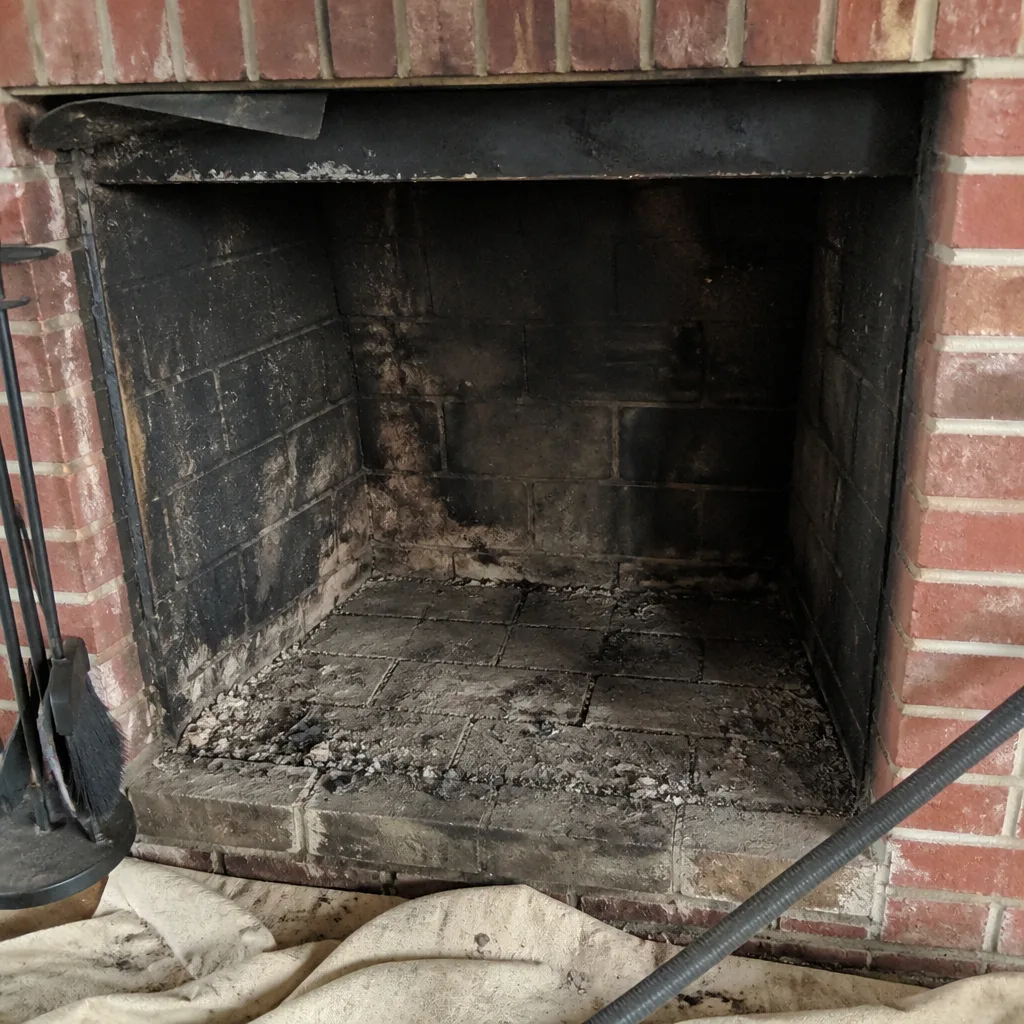 Before
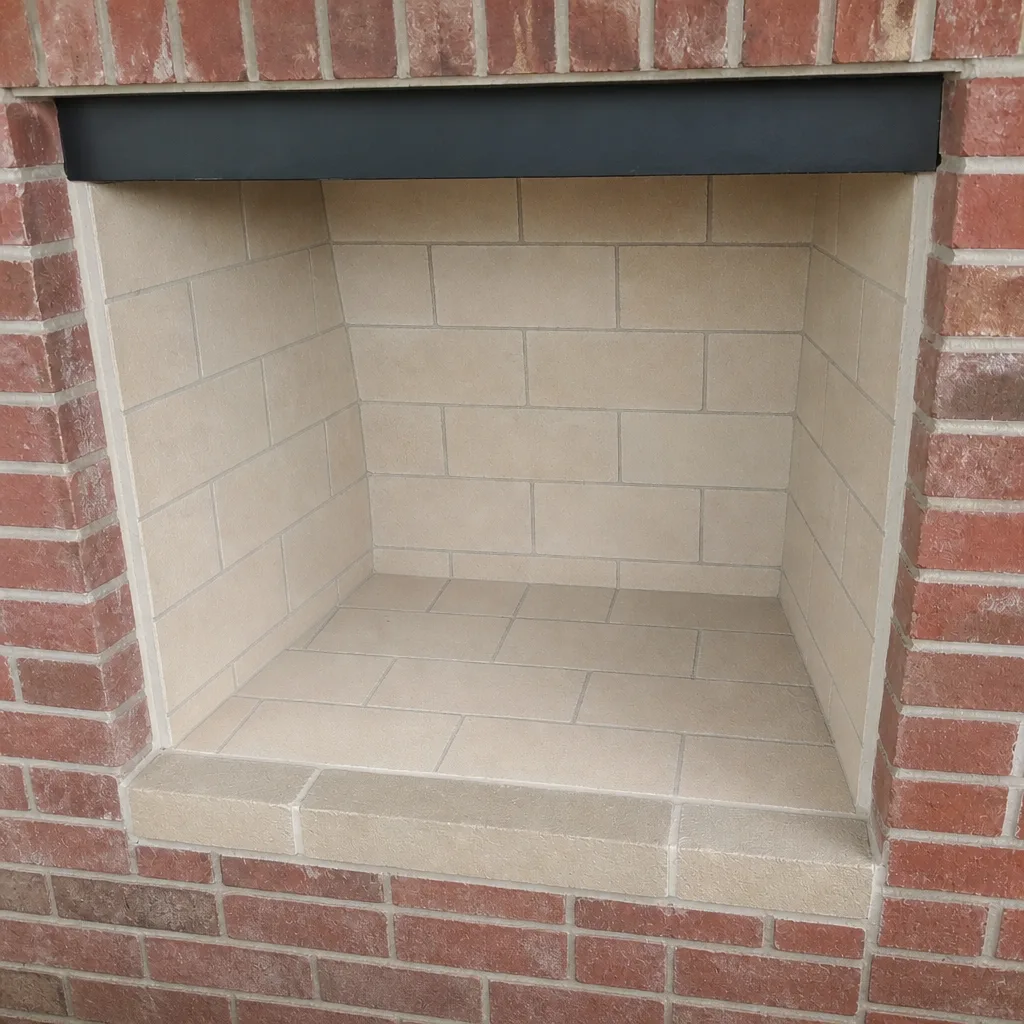 After
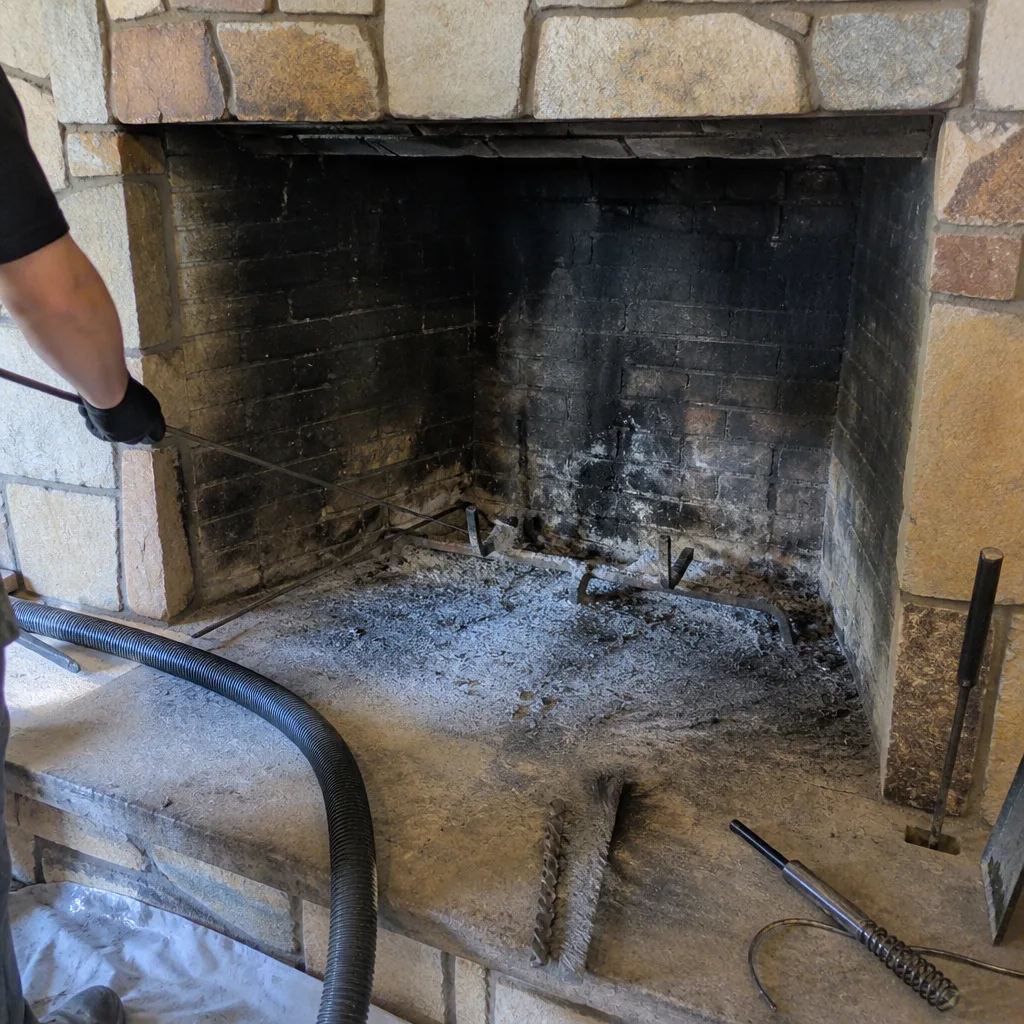 Before
 After
 Before
 After