
Last updated November 15, 2026
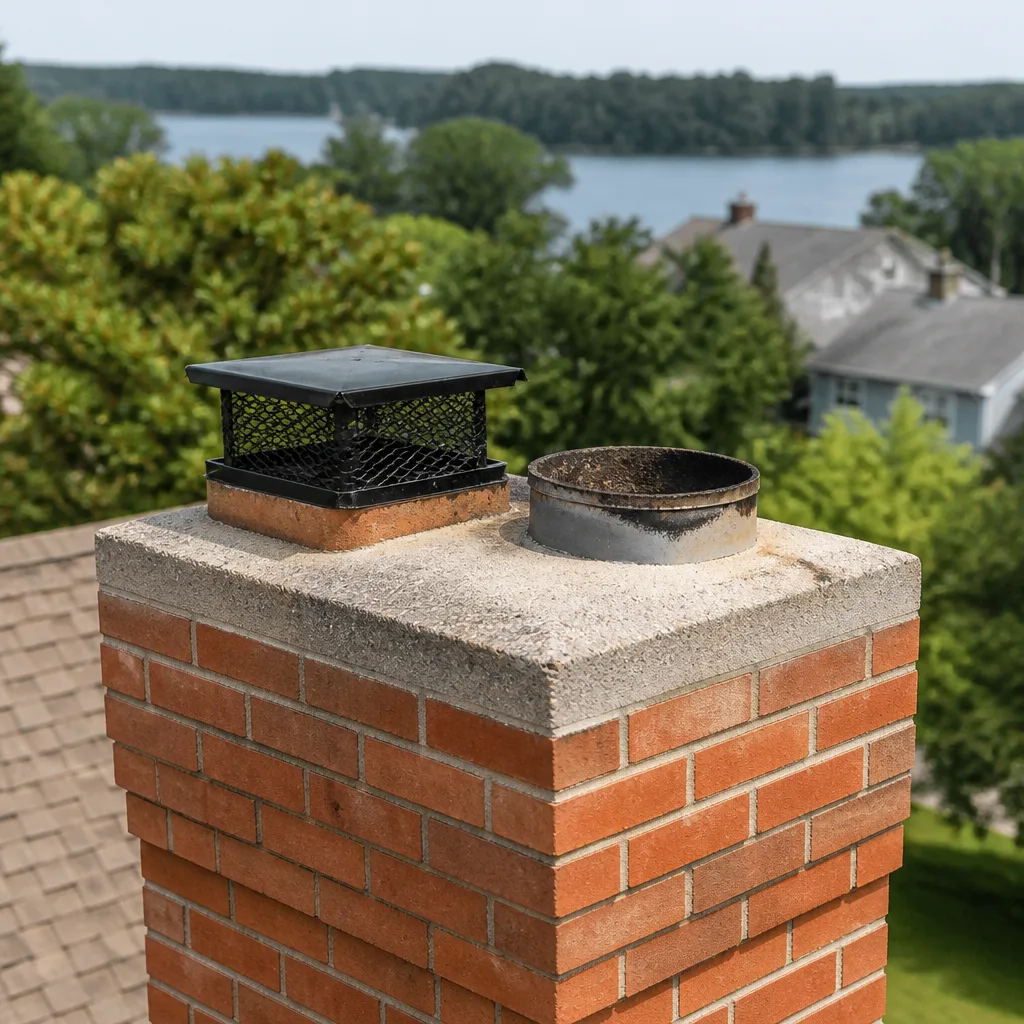 Sweep & inspection
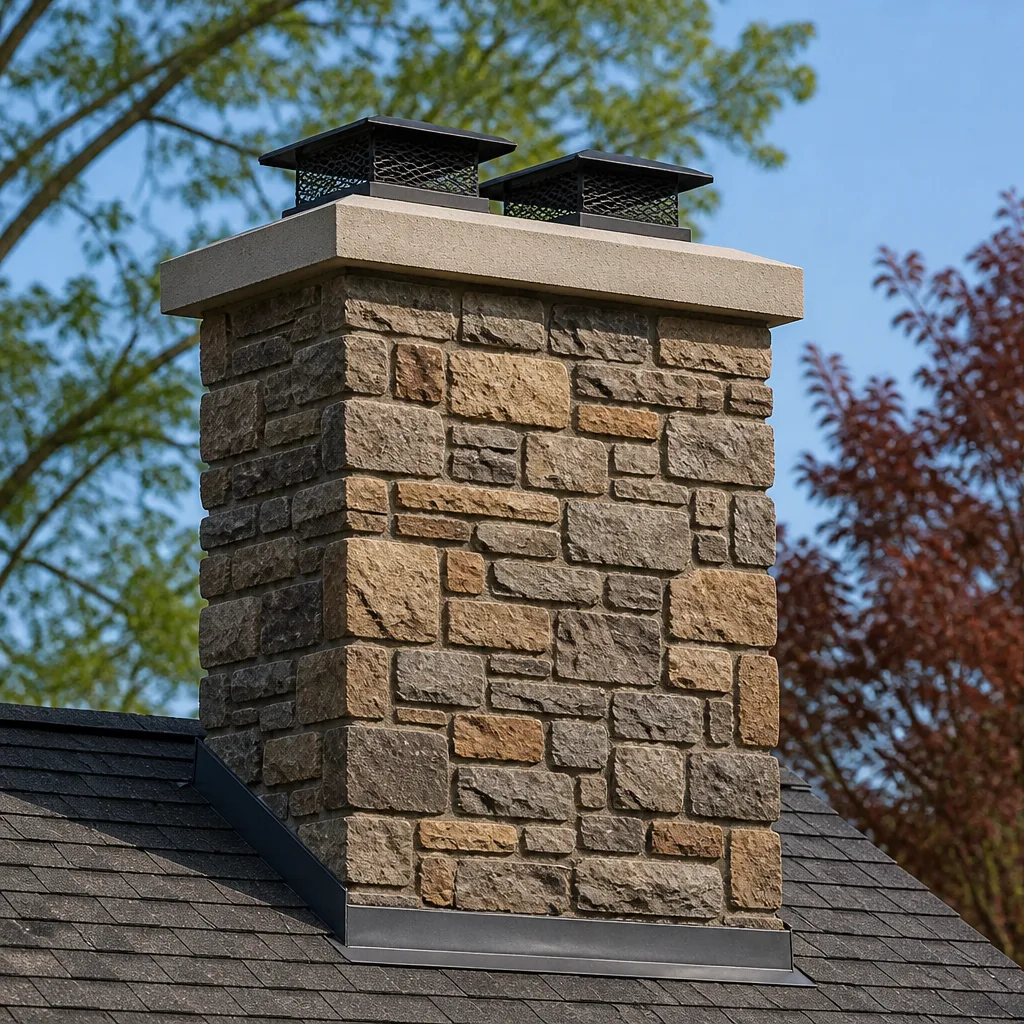 Caps & crowns
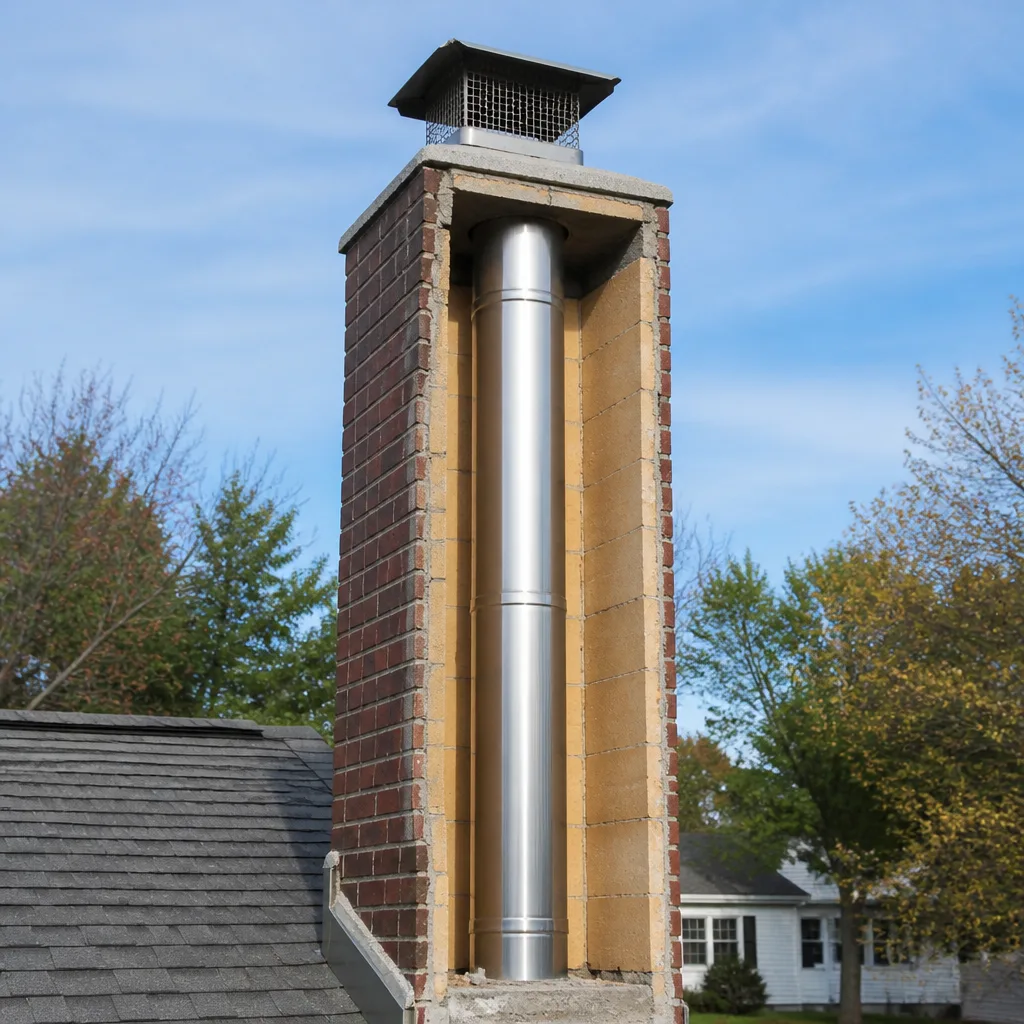 Flue relining
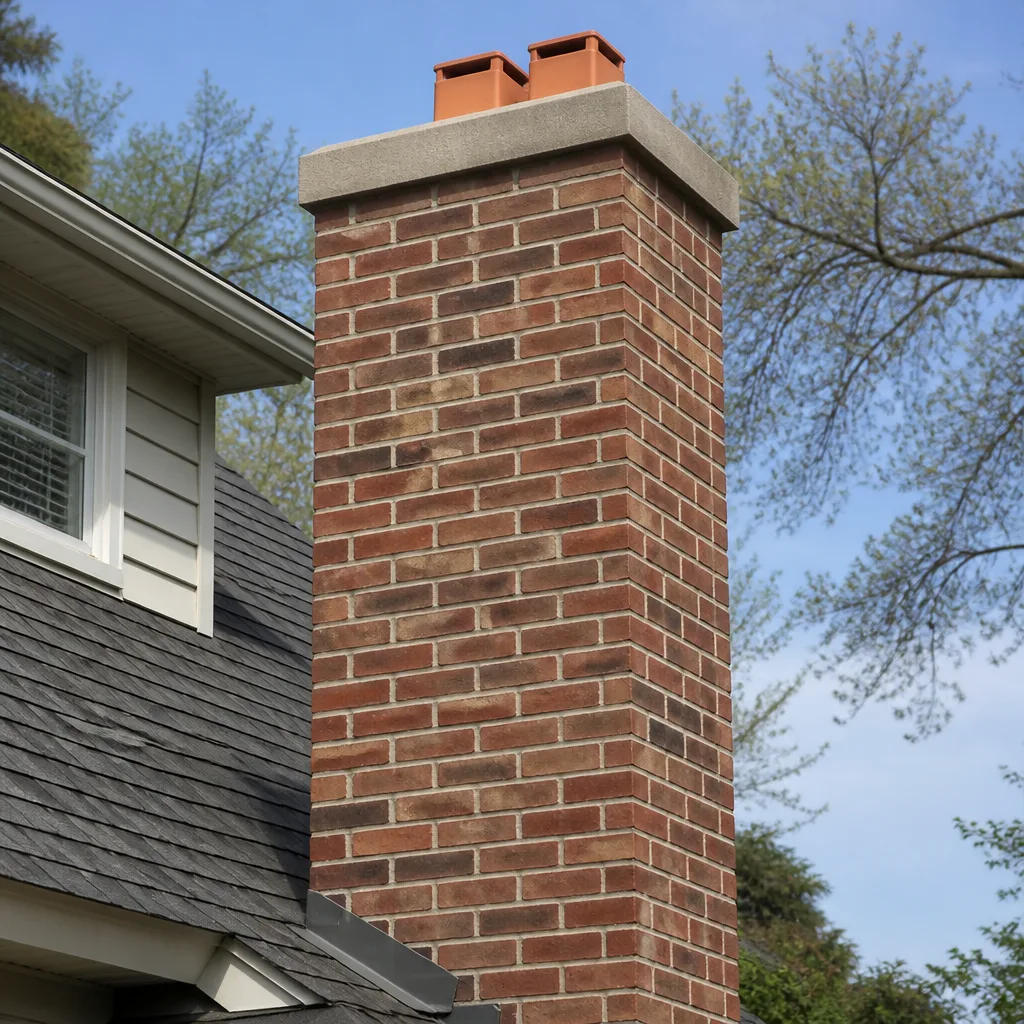 Masonry repair
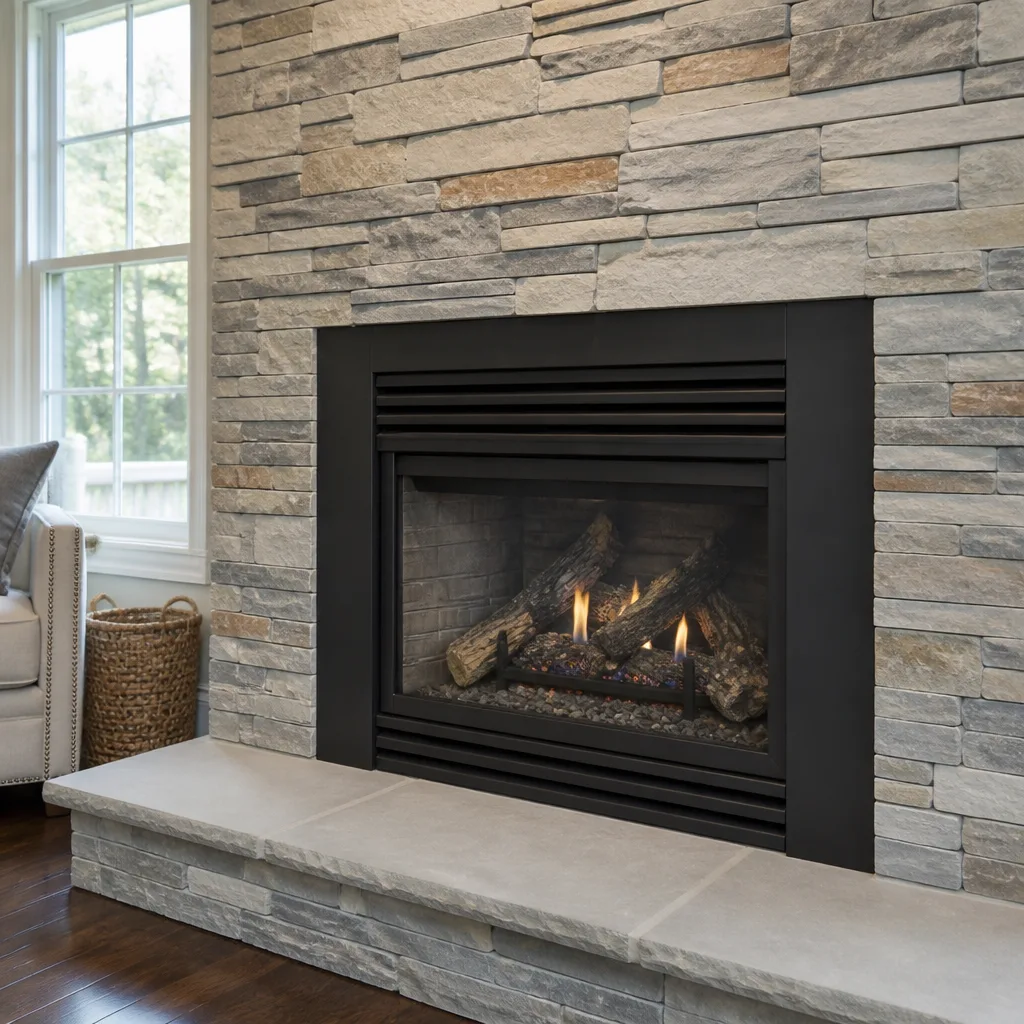 Gas fireplace service
Level 1 sweep and inspection to the NFPA 211 annual standard - flue, crown, cap, and flashing checked and photographed
Chimney sweep logs do not sweep chimneys. They loosen some creosote - which then falls where a brush and vacuum still have to collect it.
The Complete Guide to Chimney Cleaning in Greensboro
Most chimney fires in North Carolina don’t happen in January. They happen in October, on the first cold snap, in a flue that sat through a humid Piedmont summer and quietly built up glazed creosote no one thought to check. If that sounds backward, it’s because we tend to think of the chimney as a winter appliance. It isn’t. What happens to the inside of your flue between April and September matters more than what happens in February. This guide walks through how chimney cleaning in Greensboro actually works, from what the region’s clay-heavy soil and humid shoulder seasons do to a liner to what a full sweep looks like from setup to the post-service camera inspection.
Quick Answer
Chimney cleaning in Greensboro means a professional sweep, a level-appropriate inspection, and a written assessment of the whole flue system – firebox, smoke chamber, damper, liner, and cap. It typically takes 45 to 90 minutes and costs $180 to $340 for a standard sweep and Level 1 inspection. The cleaning itself is simple. What makes it worth hiring a specialist is knowing what the brush doesn’t remove and what the camera finds.
Styles & brands we work with
- Sweep & inspection
- Caps & crowns
- Flue relining
- Masonry repair
- Gas fireplace service
Table of Contents
- Why Greensboro Chimneys Are Different From What You’d Expect
- Level 1, 2, and 3 Inspections: Which One Applies to You?
- What Your Firewood Does to Your Flue
- What a Professional Sweep Actually Assesses
- How the Cleaning Process Works, Step by Step
- Chimney Cleaning Cost in Greensboro
- Common Mistakes to Avoid
- When to Call a Professional
Why Greensboro Chimneys Are Different From What You’d Expect
Greensboro sits on Piedmont clay, in a climate with four genuinely distinct seasons and a shoulder season that runs long. From April through September, relative humidity inside a closed house often sits in the 55 to 75 percent range, and poorly sealed flues see that moisture condense on interior surfaces for weeks at a time. Creosote doesn’t need a fire to form. It needs moisture, residual soot, and time, and an uncapped or loosely capped flue gets all three during a Greensboro summer.
The progression matters. Stage 1 creosote is a light, dry, flakey deposit you can brush away by hand. Stage 2 is sticky and semi-solid, and a nylon brush alone tends to smear it rather than remove it. Stage 3 is glazed and hard, and once a flue reaches that stage, the deposit has to be chemically treated and mechanically removed by a specialist. In our experience, Greensboro flues that go three or more seasons without a sweep have a much higher chance of reaching Stage 3 than they would in a drier mountain or coastal climate, simply because of how many weeks of high humidity a Piedmont summer hands them.
Add in the way Greensboro-area homes are built. A lot of the housing stock in neighborhoods like Lindley Park and College Hill dates from decades when no cap was standard, and a fair number of those flues still vent through a brick stack with no top protection at all. Rain goes in. Humidity condenses inside. Nesting birds and squirrels take shelter, and their nests hold moisture against the liner. None of this shows up from the hearth. It shows up on camera. The chimney sweep Greensboro homeowners book before burning season exists partly to catch these conditions early, while the deposit is still Stage 1 or Stage 2 and can be removed with a standard sweep instead of a relining job.
Level 1, 2, and 3 Inspections: Which One Applies to You?
NFPA 211 sets three inspection levels, and which one you need depends on what changed since your last service. A standard annual cleaning pairs with a Level 1. A Level 2 adds a video inspection. A Level 3 gets into the assemblies. Getting the level right is what separates a real assessment from a quick look up the flue.
Level 1 Inspection
A Level 1 inspection covers all readily accessible portions of the chimney, including the firebox, the damper, the visible parts of the smoke chamber, and the accessible portion of the flue. It’s the standard inspection paired with an annual sweep, and it’s appropriate when your chimney has no known changes and no reported issues. Most Greensboro homeowners who burn wood at typical rates need this every year.
Level 2 Inspection
A Level 2 inspection adds a video camera scan of the entire flue and includes accessible portions of the chimney’s interior and exterior, along with a review of the attic and crawl spaces where the chimney passes through. A Level 2 is appropriate after a chimney fire, after an earthquake or significant storm, when you’re buying or selling a home, when you change fuel type or appliance type, or when you’ve added a new liner or insert. Real estate transactions are one of the most common reasons Greensboro homeowners call for a Level 2, and the written camera report often becomes part of the negotiation.
Level 3 Inspection
A Level 3 inspection is the fullest assessment. It’s performed when a Level 1 or Level 2 inspection has flagged a hidden hazard in a concealed chimney area, and it may require opening walls or removing part of the chimney chase. Level 3 inspections are rare, and they’re usually the response to a specific finding, not a routine service.
In our experience running these assessments for Greensboro homeowners, the most overlooked inspection need is post-storm. A strong Piedmont thunderstorm can shift a cap or crack a tile at the top of the flue in a way that never shows from inside the firebox. If your chimney has seen a storm season since its last Level 1, and you haven’t had a camera in the flue, a Level 2 is worth the call. Our chimney repair work begins the same way: with evidence, not guesses.
What Your Firewood Does to Your Flue
Greensboro’s firewood supply is dominated by oak and hickory, and both have a reputation for reasonable heat output. What they also do is dry slowly in a humid climate. Seasoned oak that measures 20 percent moisture in Vermont might measure 24 to 28 percent in a Greensboro woodshed after a wet summer, and creosote yield tracks moisture content far more closely than it tracks species. Burn oak at 26 percent moisture and you’ll get more creosote than you’d expect from the species chart. Burn it at 18 percent and you’ll get a steady, cleaner burn at the same firebox temperature.
Hardwoods like oak and hickory burn cleaner per cord than softwoods when properly seasoned, but “cleaner” is not the same as “clean enough to skip service.” A typical Greensboro household burning one to three cords in a fireplace or insert still builds measurable deposit over the course of a season. The deposit is what needs sweeping, and one to two cords of hardwoods a year usually means an annual sweep at minimum, sometimes a midseason check if you notice draft loss.
- Moisture content matters more than species. Aim for 15 to 20 percent, measured on a freshly split face, not the end of the log.
- Hardwoods are the right default for Greensboro. Oak and hickory dominate local supply and both burn well when seasoned.
- Never burn wet wood “to save money.” Unseasoned fuel is the fastest way to accelerate creosote staging.
- Avoid burning construction scrap, cardboard, or trash. These leave different residue than firewood, and some of it clings to the liner.
- Store wood off the ground and covered on top only. A tarp wrapped around all four sides traps moisture.
If you burn an insert or a woodstove rather than an open fireplace, your burn rate matters more than your cord count, because a stove runs hotter and a controlled fire loads the liner with a steadier, denser deposit. We cover appliance-specific issues on our chimney sweep page, but the short version is this: a woodstove that sees one cord a year still needs an annual sweep, plus a midseason flue check if you burn the shoulder months too.
What a Professional Sweep Actually Assesses
The firebox is the least interesting part of a chimney sweep’s visit. What matters is everything above and around it. A sweep worth the appointment checks the following, and reports on each one.
The Smoke Chamber
The smoke chamber sits above the damper and below the flue and is usually corbeled brick with a rough interior surface. It’s a creosote trap because deposit clings to the rough masonry and the sweep’s brush doesn’t always reach every ledge. In our experience, this is where a lot of the neglected deposit in Greensboro homes accumulates, especially in fireplaces that were remodeled with an insert but still vent through the old smoke chamber. HeatShield is useful here for resurfacing the rough interior when the brick has deteriorated, which restores draft and gives future sweeps a smooth surface to work with.
Damper Seating
A damper that doesn’t seat properly is a draft problem in one direction (smoke spilling into the room) and an energy loss in the other direction (heated air escaping up the flue when no fire is burning). Seating is checked by hand and, when needed, by mechanical test. A warped or rusted damper plate is a simple component swap and usually not worth postponing.
Liner Integrity
The liner is the flue’s actual safety system, and in Greensboro’s older neighborhoods it may be original clay tile, a retrofitted stainless system, or a cast-in-place liner. Clay tile is vulnerable to spalling and cracking from moisture cycling and thermal shock, and a single cracked joint in a clay liner lets combustion gases escape into the chimney chase. This is where a video scan earns its cost. DuraFlex and Olympia Chimney systems are both useful for relining a damaged clay flue, and the choice between them depends on the flue’s geometry and the appliance’s venting requirements.
Cap Condition
The chimney cap is what keeps water, animals, and wind-blown debris out of the flue. A missing, rusted, or loose cap is the single most common reason Greensboro flues build creosote and moisture damage faster than they should. Cap replacement is inexpensive compared to what an unprotected flue costs over time.
Crown and Masonry
The crown at the top of the chimney sheds water away from the flue. A cracked crown lets water wick into the brickwork below, which then freezes and spalls in a Greensboro winter. This isn’t a chimney-cleaning item strictly, but it’s inspected on every visit because it directly affects liner life.
If you want the deeper view on any of these findings, the Greensboro Chimney Cleaning homepage lays out how we structure the sweep, inspection, and repair relationship.
How the Cleaning Process Works, Step by Step
A professional sweep follows a predictable sequence, and knowing it helps you understand what’s happening around your home. Here’s the process step by step.
- Setup and containment. Drop cloths go down in front of the fireplace, and a sealed containment system attaches around the opening so no soot escapes into the room. If your chimney has an exterior cleanout, that’s covered first.
- Pre-inspection. Before any brush goes up the flue, the technician checks the firebox, damper, and accessible flue for visible condition, and notes anything unusual for the report.
- Sheet and brush, bottom to top. Powered or manual brushes work the flue from the top down or bottom up depending on the chimney’s configuration. Creosote is removed with the appropriate tool for the deposit stage – poly brushes for Stage 1, metal or rotary for Stage 2, and chemical treatment followed by rotary removal for Stage 3.
- Smoke chamber and firebox cleaning. A vacuum runs throughout. The smoke chamber is scraped and swept, and the firebox floor and walls are brushed clean.
- Damper and cap check. The damper is opened and closed to confirm seating. The cap and crown are inspected from the roof or the top of the chase.
- Post-service camera inspection. A video camera is dropped through the flue and the scan is recorded for you to see. Any cracks, gaps at joints, or rough patches are flagged by timestamp.
- Photo report and written assessment. You receive photos of the flue before and after, plus any findings that matter. Nothing is recommended without a photo to back it up.
That last step is the one that tells you whether the sweep was a real assessment or a quick brush. If a technician tells you the liner needs replacing, ask to see the section of the scan that shows the crack. If they can’t show it, it’s a sales conversation, not a service report. Every recommendation we make is tied to a photo or a camera frame the homeowner can look at on their own, and we tell you plainly when a finding can wait a season. Some of what we find is worth fixing now. Some of it isn’t, and the shoulder season (not the first cold snap) is when that distinction is easiest to make calmly.
Chimney Cleaning Cost in Greensboro
A standard chimney sweep paired with a Level 1 inspection in Greensboro typically runs $180 to $340, and the price depends on the flue configuration, the deposit stage, and whether the sweep needs a camera. Here are typical ranges for the work Greensboro homeowners most often ask about.
| Service | Typical Estimated Cost | Notes |
|---|---|---|
| Standard sweep + Level 1 inspection | $180 – $340 | Most common annual service; includes photo report |
| Level 2 inspection with video scan | $150 – $300 | Often needed after a home sale, storm, or chimney fire |
| Stage 3 / glazed creosote removal | $350 – $900 | Chemical treatment plus mechanical removal; varies with flue height |
| Cap replacement | $90 – $250 | Simple component swap in most cases |
| Damper repair or replacement | $125 – $375 | Depends on damper style and access |
| Stainless relining (per foot) | $35 – $85 per foot | DuraFlex or Olympia Chimney systems; varies with flue geometry |
| Smoke chamber resurfacing | $600 – $1,500 | HeatShield application; pricing varies with chamber size and access |
These are typical ranges for the Greensboro area, not quotes. The written estimate is what sets the final price, and nothing is recommended or added without a photo of what it addresses. If you’d rather start with a sweep and inspection to see what’s actually in the flue before deciding on any repair, that’s the right first call, and we’ll say so.
What these ranges don’t cover is what an ignored flue can cost downstream. A cracked clay liner that goes unnoticed can lead to a reline at four to six times the cost of the sweep that would’ve caught it early, and a chimney fire caused by Stage 3 glazed creosote can do damage that extends well beyond the flue itself. The cheapest dollar in chimney work is almost always the one spent on the annual sweep.
Common Mistakes to Avoid
- Waiting until the first cold snap. October is when everyone in Greensboro calls at once. The better window is late August or September, after the humid season has ended but before the first burn, which gives you a flue that’s genuinely conditioned for the season.
- Judging the flue by what you can see from the hearth. The firebox looks clean long after the smoke chamber and the upper flue have substantial deposit. You can’t assess a chimney from the floor of the room.
- Assuming hardwood firewood means less creosote. Oak and hickory burn cleaner than softwood when seasoned, but unseasoned oak burns wetter than seasoned pine and deposits more creosote than a homeowner expects.
- Using a chimney sweep log or a hand brush you bought at a hardware store. Those products address only the loosest Stage 1 deposit and give no information about what’s actually in the liner. A sweep without an inspection is an incomplete service.
- Running an unsealed or uncapped flue through a Greensboro summer. This is the single biggest driver of creosote staging in the region, and it’s the cheapest thing to fix.
- Believing a “no cleaning needed” verdict from a company you didn’t watch. Ask to see the camera scan. If the technician can’t show you the inside of your own flue, you don’t have an assessment.
- Hiring a general handyman for a relining or smoke chamber job. Liner systems from DuraFlex and Olympia Chimney and resurfacing products like HeatShield are professional-install products with specific application requirements. They’re not general-purpose handyman work.
On the flip side, one mistake we’ve seen Greensboro homeowners make that costs nothing to avoid: assuming that a house with an unused fireplace can skip the sweep. An unused flue still collects moisture, animal nests, and masonry debris, and if the system is intended to remain functional for a future homeowner, it needs a periodic assessment. If it’s been sealed off entirely and correctly, that’s a different situation, and one we can help you confirm.
When to Call a Professional
Call a professional when you’ve burned a full season since your last sweep, when you’ve just bought or sold a home in Greensboro with a chimney, or when a storm has passed through the area and you haven’t verified the cap and crown. Call when you smell a strong smoky odor from the fireplace in warm weather, when draft has become sluggish or smoky, when you see visible creosote on the damper or firebox walls, or when you’ve had a chimney fire, even a small one. Those last two are the ones homeowners most often skip, and they’re the two that most need a camera.
Greensboro Chimney Cleaning offers free estimates in Greensboro – call (888) 366-5537. Our technicians have up to 11 years of experience, we answer 24/7, and we run fast dispatch from 7am to 7pm, Sunday through Friday. If you’ve never had your flue on camera and you’ve been burning for more than two seasons, that’s the call worth making. Find out what’s actually there before you spend a winter burning into it.
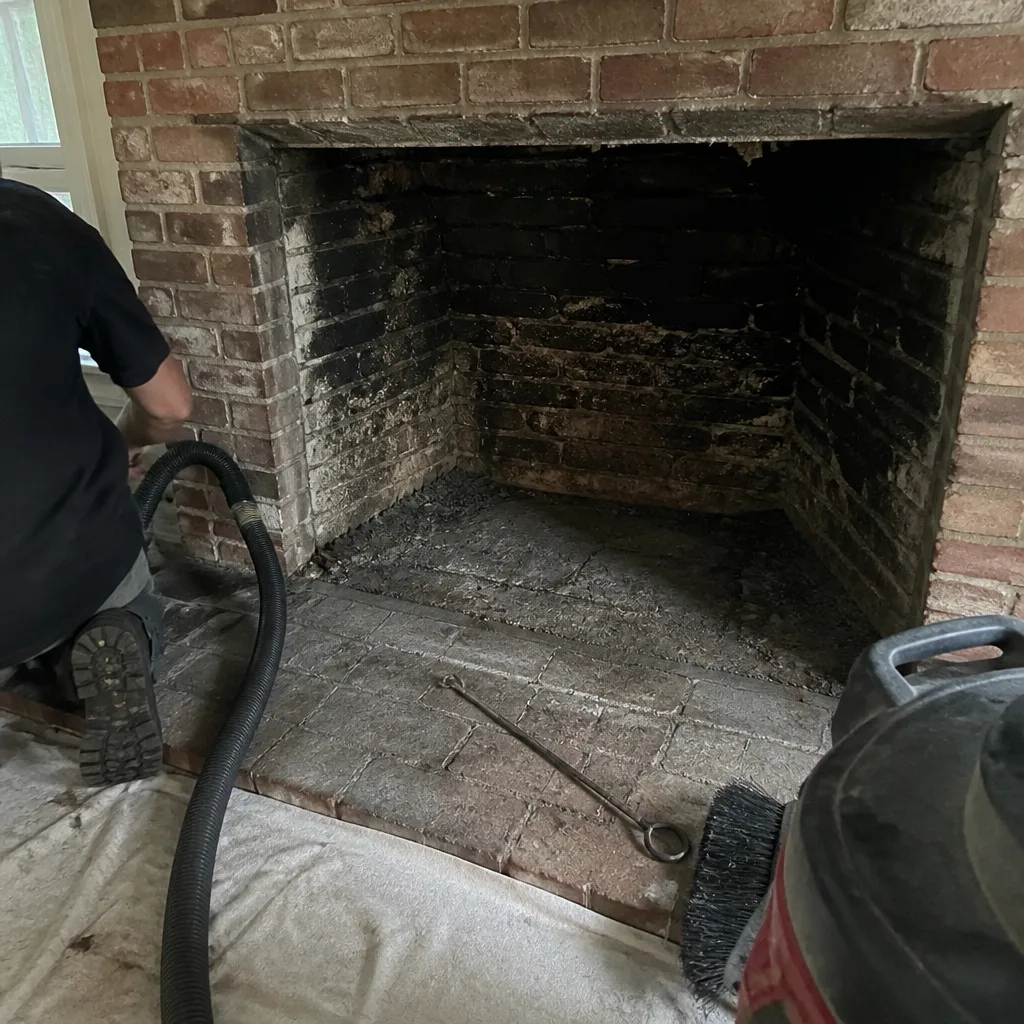
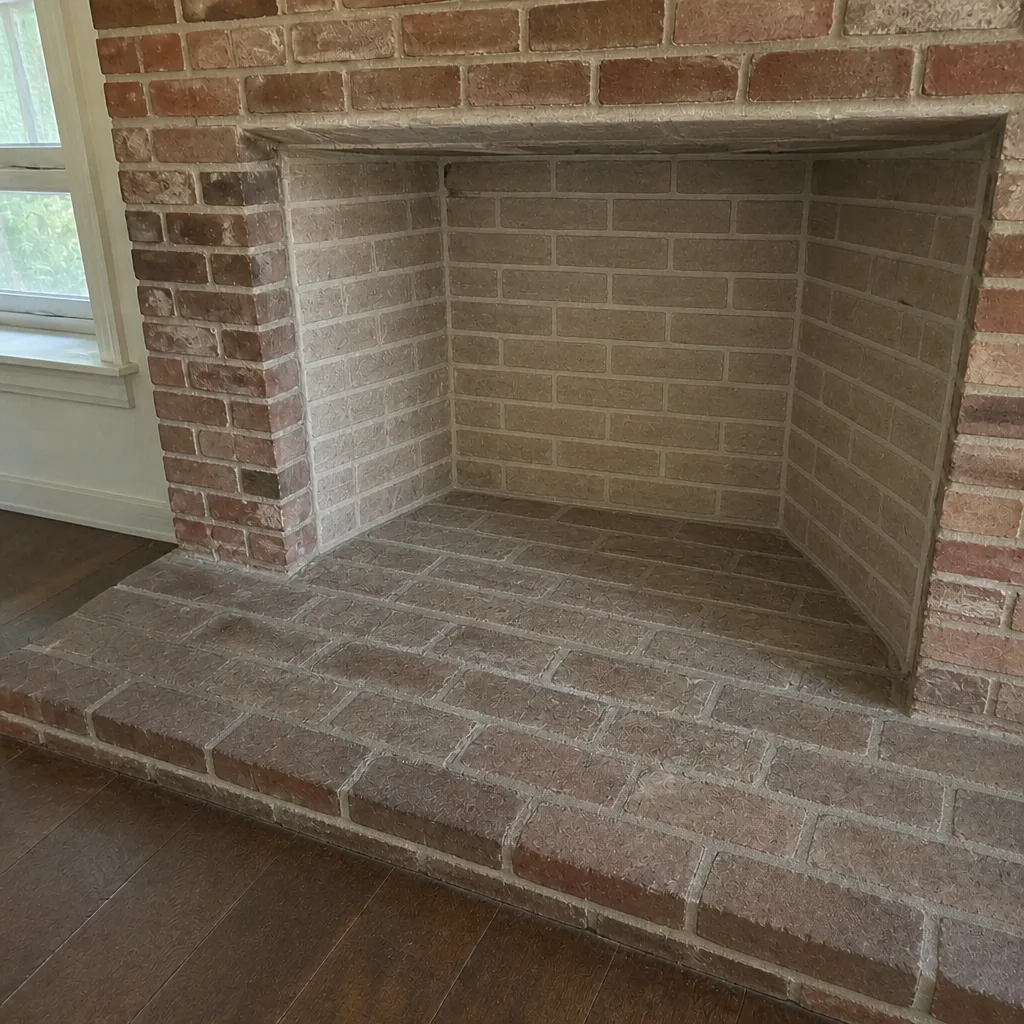
See the difference
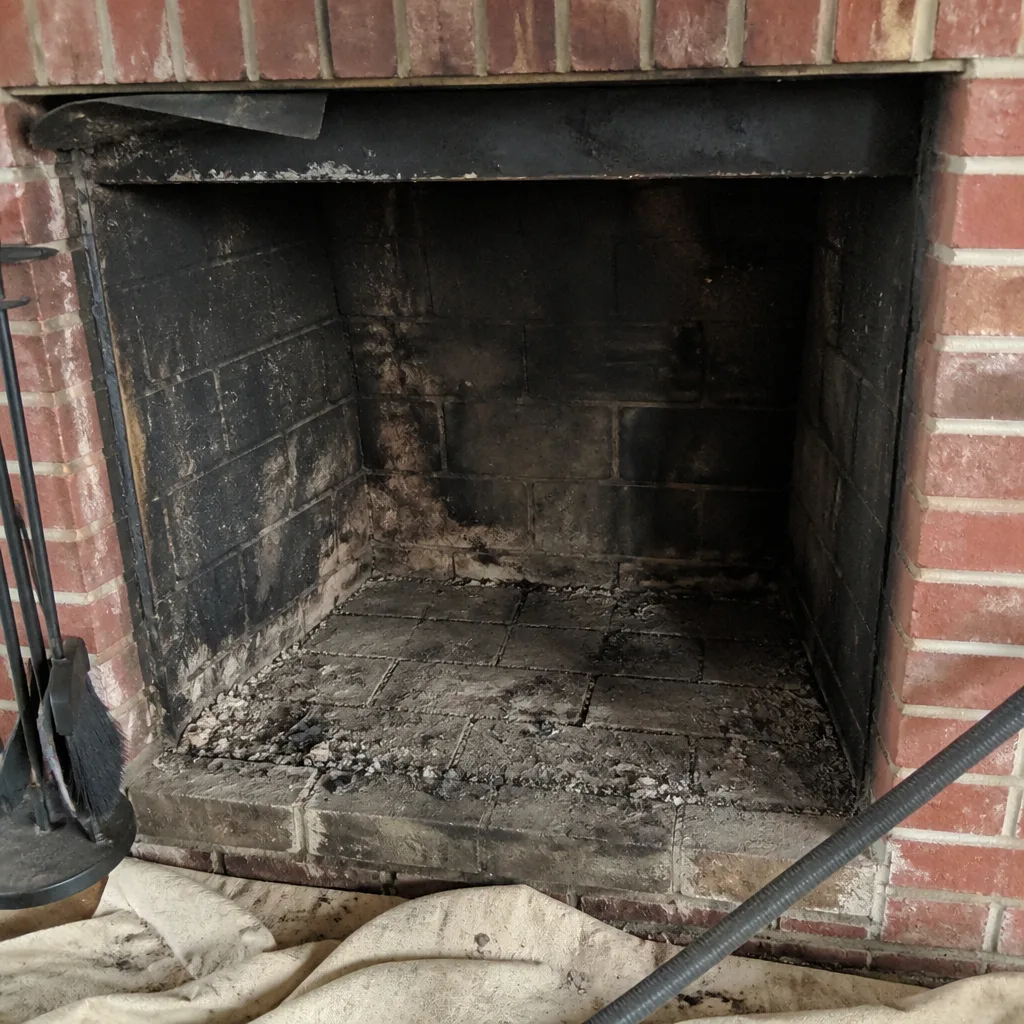 Before
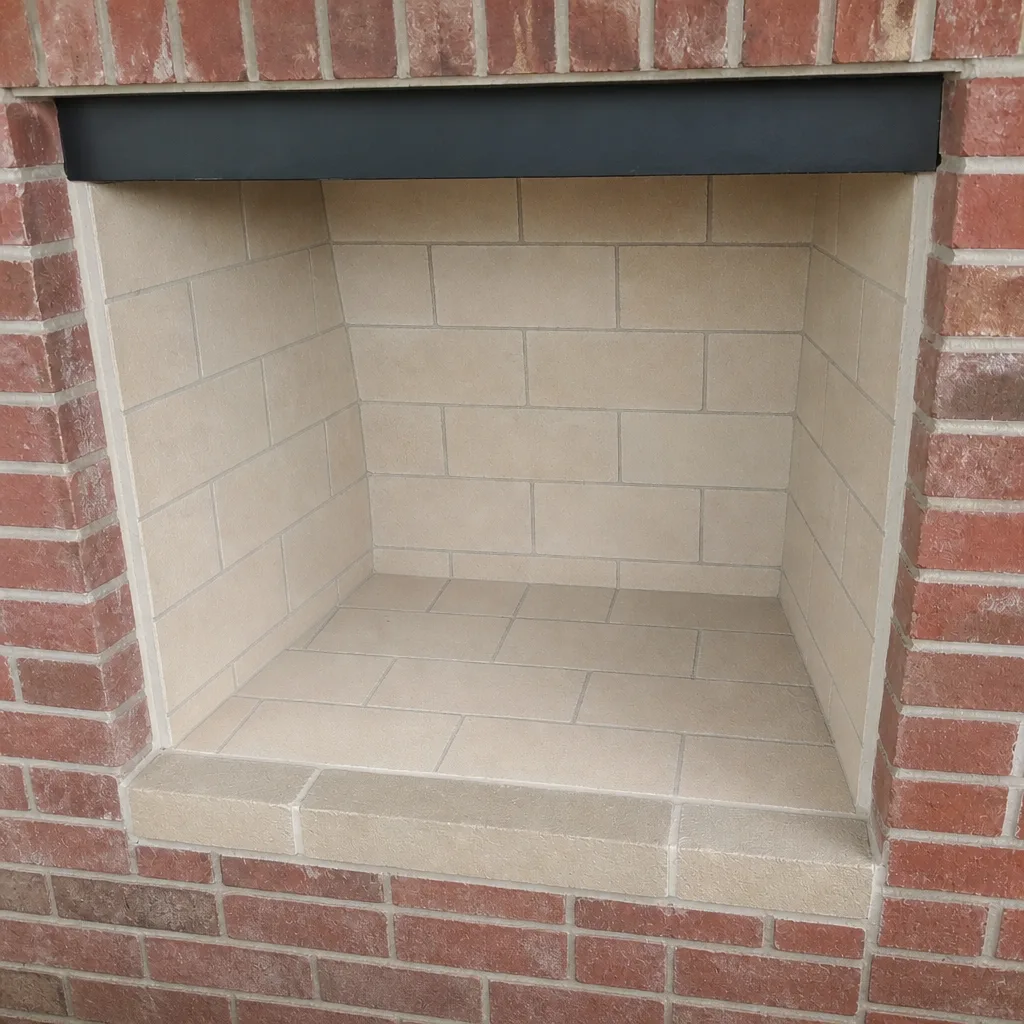 After
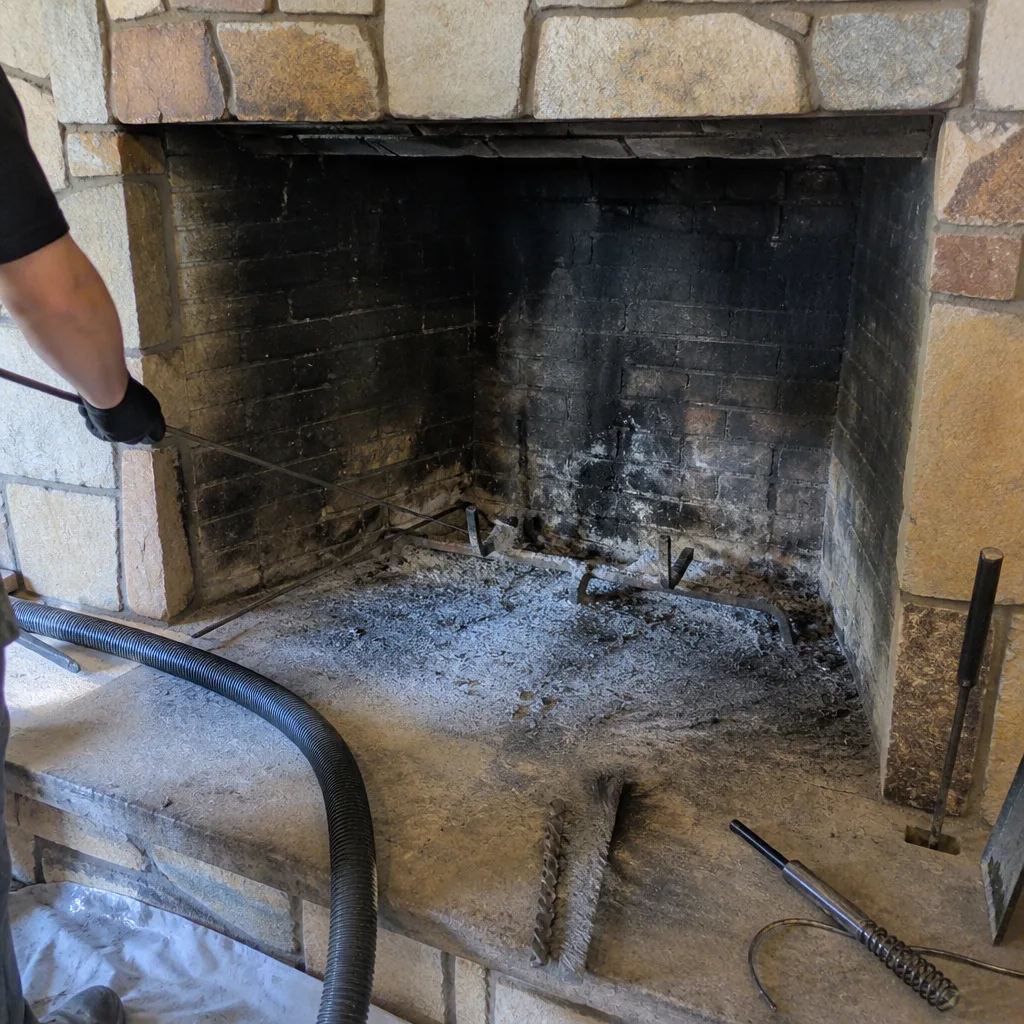 Before
 After
 Before
 After
Frequently Asked Questions
A standard sweep plus a Level 1 inspection in Greensboro typically costs $180 to $340, and the exact price depends on the flue configuration and the deposit stage found during inspection. A sweep with a camera scan and video report usually lands in the same range, with additional work priced only after the findings are documented. The written estimate sets the final price, and nothing gets added without a photo. Call (888) 366-5537 for an exact quote – estimates are free.
Once a year during active burning is the baseline for a wood-burning fireplace or insert, and that annual sweep should pair with a Level 1 inspection. Greensboro’s humid shoulder season pushes a lot of flues past the point where a sweep alone is enough, so if you’ve skipped a year or more, book a sweep and be ready to look at the camera scan. If you burn lower volumes, an annual sweep is still the simplest way to track what’s changing in the flue. Call (888) 366-5537 to schedule yours.
Only if the camera shows a genuine defect – a cracked clay tile, a gap at a joint, or a failure in an existing stainless liner. In our experience, a fair number of “you need a new liner” conversations that happen in Greensboro homes are not backed by a visible finding, and that’s why we tie every recommendation to a photo. If the flue scans clean, you don’t need a liner, regardless of age of the home. If it doesn’t, DuraFlex or Olympia Chimney systems are the usual solution. Call (888) 366-5537 and ask to see the scan before anything is decided.
Creosote builds up and stages. Stage 1 is light and brushable, Stage 2 is sticky and needs mechanical removal, and Stage 3 is glazed and requires chemical treatment plus rotary work. Each stage is harder and more expensive to remove than the last, and Stage 3 is the stage associated with chimney fires. Skipping a sweep doesn’t cause a fire on its own, but it removes the one moment of the year when anyone is looking inside the flue. Call (888) 366-5537 to get back on schedule.
Because the creosote that causes chimney fires is often built during the humid months, not during burning season. A Greensboro flue that sat through a Piedmont summer without a cap condenses moisture against residual soot, which accelerates creosote staging. By the time the first cold snap arrives in October, the deposit is already there, and the first hot fire of the season is what ignites it. The fix is a pre-season sweep, not a mid-winter emergency. Call (888) 366-5537 to book one before the first cold front.
A Level 2 inspection is the appropriate level whenever a home is being bought or sold, because it’s the one that documents the flue on camera and creates a report both sides can review. It’s not legally required everywhere, but it’s the level your real estate inspector and your buyer’s lender are most likely to ask about. If the sale is close and time is tight, a sweep plus a Level 2 scan is the right call. Call (888) 366-5537 to schedule.
The Bottom Line
Chimney cleaning in Greensboro is a seasonal-pattern question more than a habit question. The deposit that matters most is the deposit built during the humid months, and the service that catches it is the sweep paired with a real inspection, on camera, with a photo report you keep. Piedmont clay, hardwood firewood, and Greensboro summers don’t make your chimney riskier than anywhere else, but they do make the timing of a sweep matter more than most homeowners expect. Get it done before the first cold snap. Insist on the camera. See the evidence before you spend on anything beyond the sweep itself.
Everything we recommend ties to something you can see in a photo, and we’ll say when a finding can wait. If the scan is clean, that’s good news you can trust. If it isn’t, you’ll have a written estimate that explains what it fixes and why. Either way, you don’t have to guess. Our technicians have up to 11 years of experience assessing flue systems in homes across Greensboro, and we’ll tell you what a professional standard looks like for your chimney.
Call (888) 366-5537 for a free estimate. We answer 24/7. Fast dispatch from 7am to 7pm, Sunday through Friday.
Written by the team at Greensboro Chimney Cleaning.