
Last updated November 15, 2026
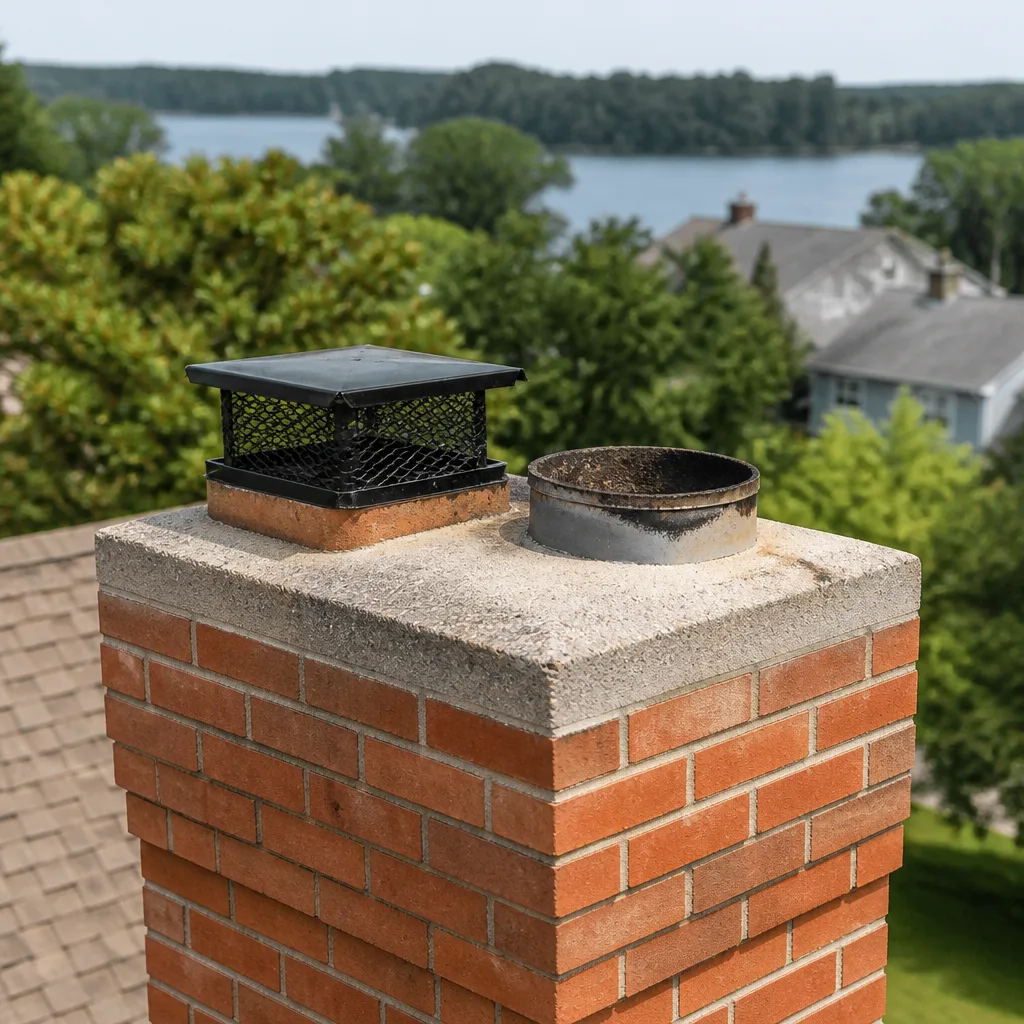 Sweep & inspection
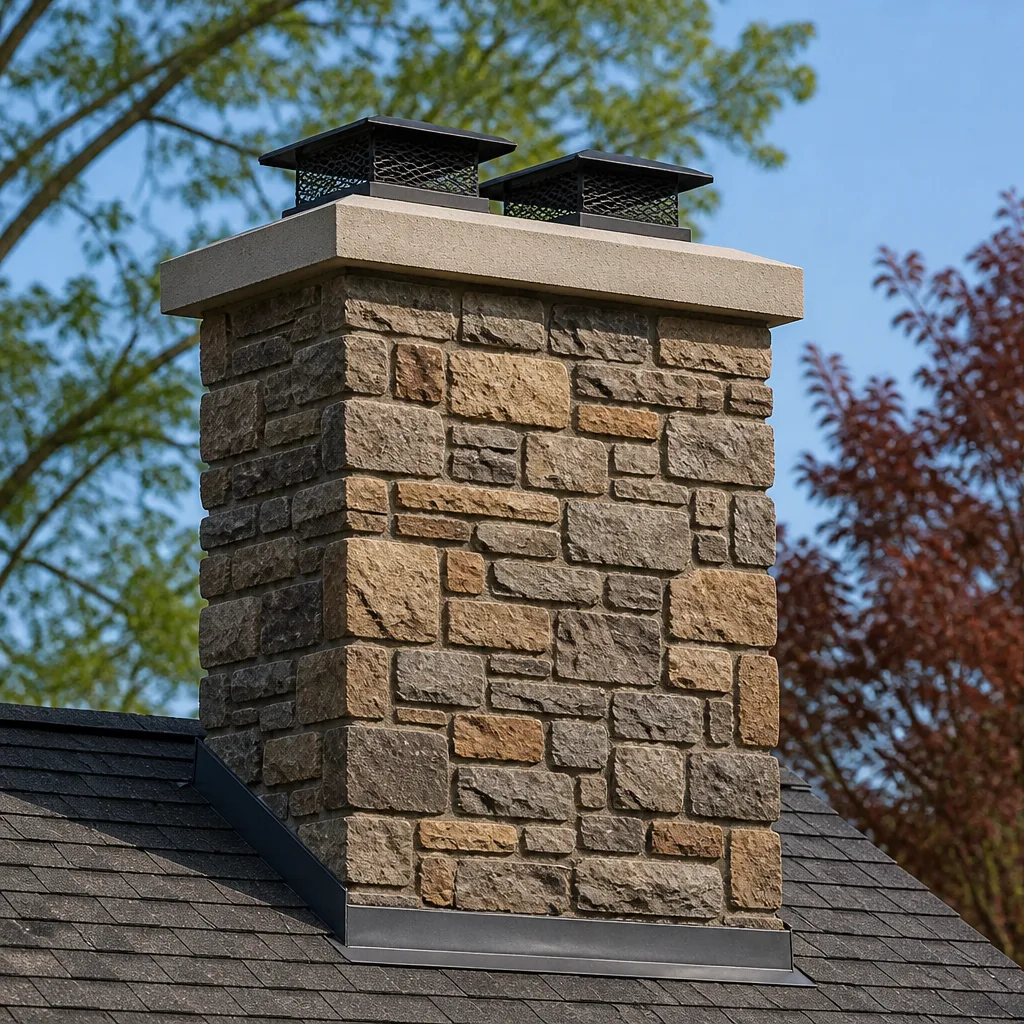 Caps & crowns
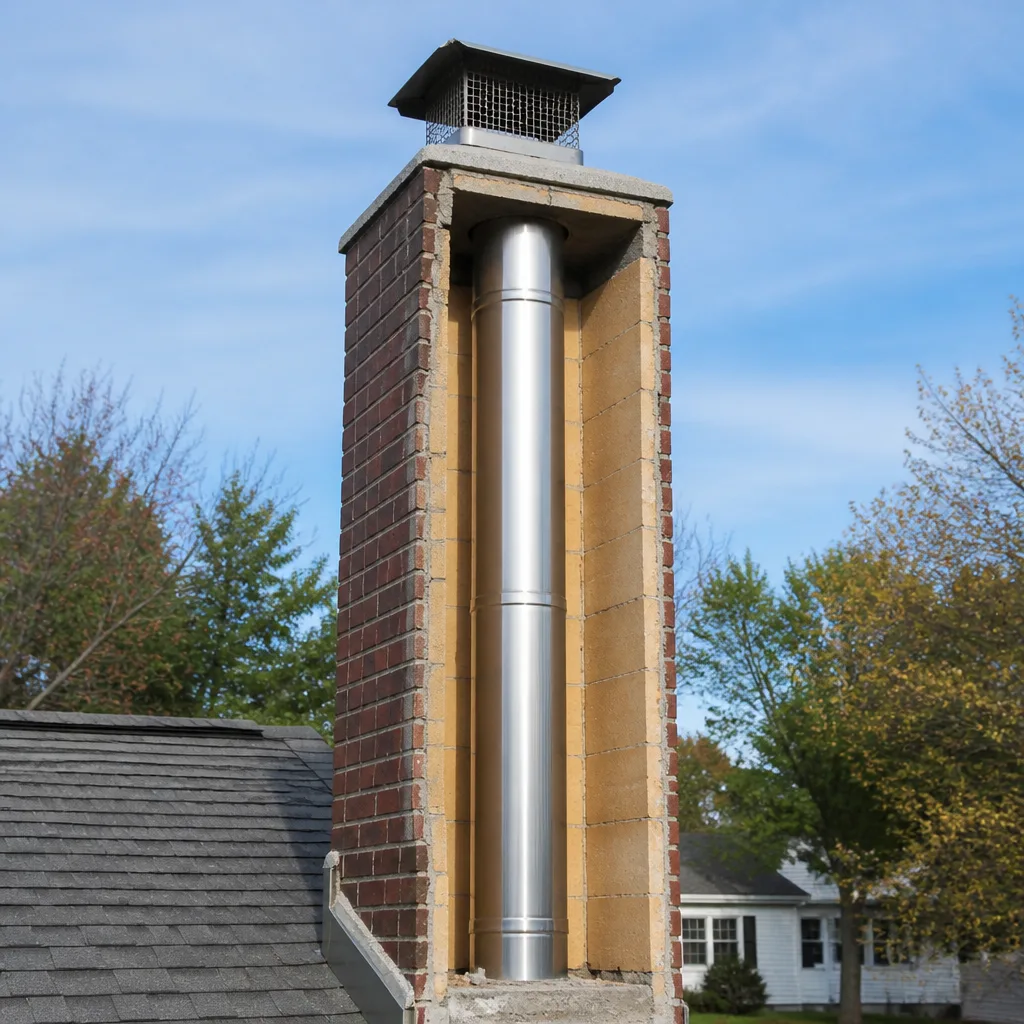 Flue relining
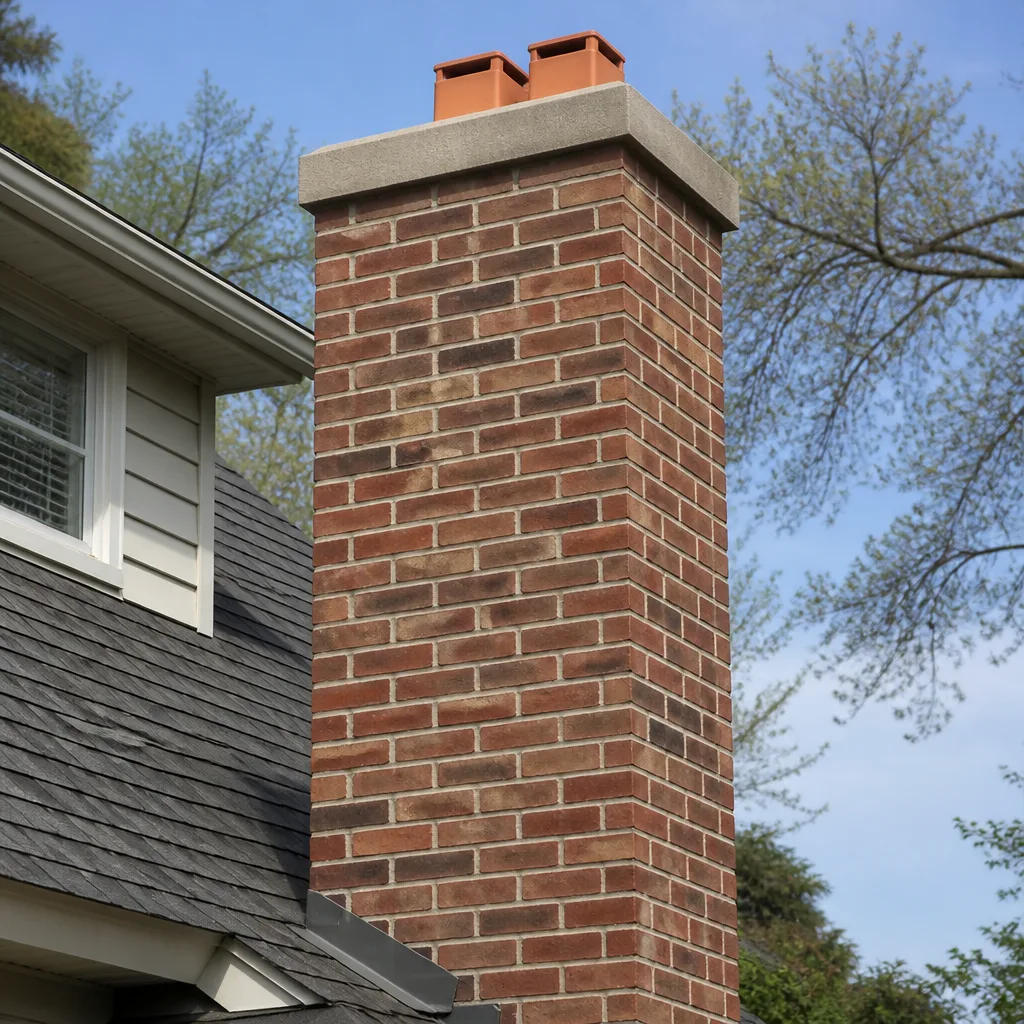 Masonry repair
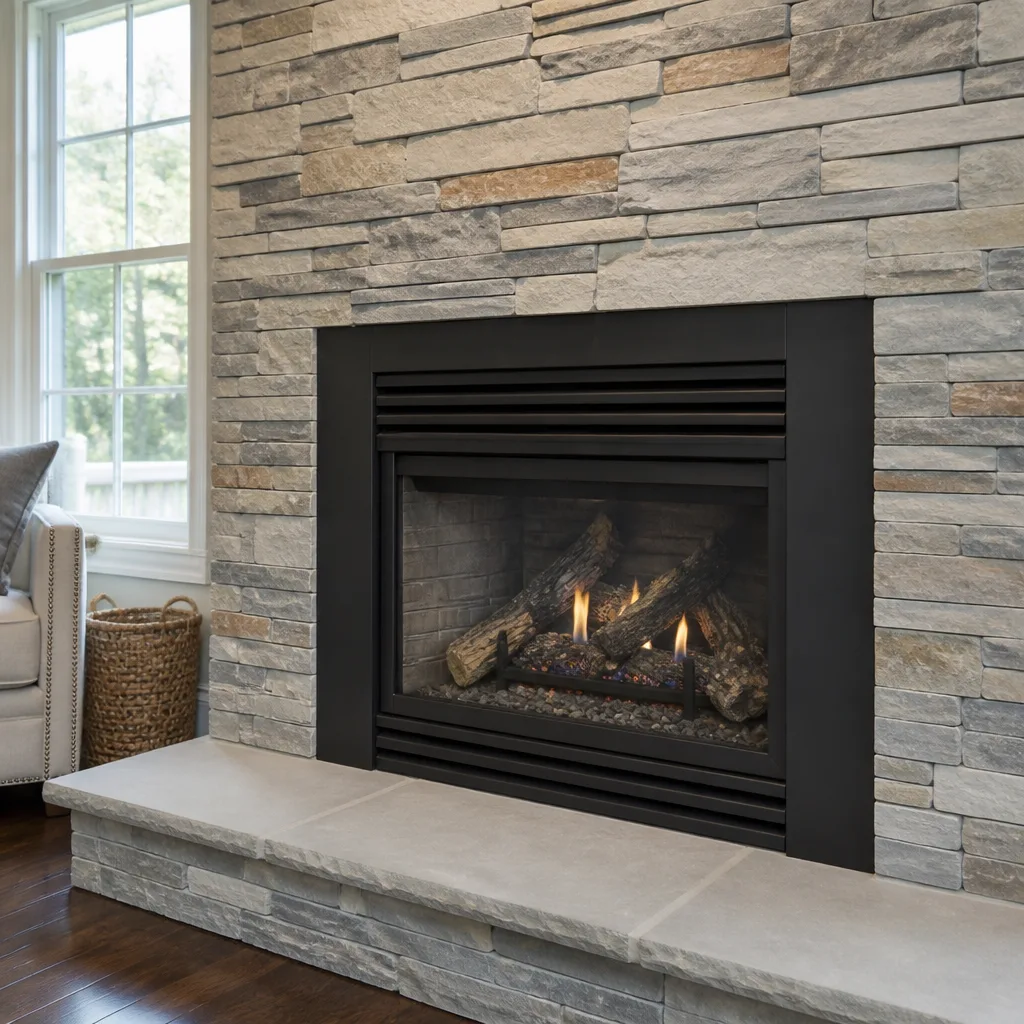 Gas fireplace service
Level 1 sweep and inspection to the NFPA 211 annual standard - flue, crown, cap, and flashing checked and photographed
Chimney sweep logs do not sweep chimneys. They loosen some creosote - which then falls where a brush and vacuum still have to collect it.
Chimney Sweep Maintenance Schedule: What to Do and When
The “sweep once a year” rule gets repeated so often that most homeowners treat it as an engineering standard. It isn’t. That figure became the default because it’s a safe liability floor for a sweeping recommendation, not because every chimney in Greensboro accumulates creosote at the same rate. A household burning two cords of seasoned hardwood through the winter and a household burning a single cord of mixed softwood are on wildly different timelines, and treating them the same means one of them is being serviced too often while the other is being neglected. This guide replaces the calendar-based approach with a usage-based framework so your chimney gets attention when it actually needs it.
Quick Answer
Most Greensboro homes should schedule a professional chimney inspection once a year and a sweep based on usage: light use (under one cord per season) usually needs a sweep every two to three years, moderate use (one to two cords) needs one annually, and heavy use (more than two cords) often needs a mid-season sweep in addition to the annual visit. Gas fireplace systems still need an annual inspection even though they produce no creosote. Any chimney that has just had a repair or liner replacement needs a mid-season check its first year regardless of how much you burn.
Styles & brands we work with
- Sweep & inspection
- Caps & crowns
- Flue relining
- Masonry repair
- Gas fireplace service
Table of Contents
- Why “Once a Year” Isn’t a Real Schedule
- The Usage-Tier Framework for Sweep and Inspection Intervals
- A Greensboro Seasonal Maintenance Calendar
- What Homeowners Can Check Between Professional Visits
- Gas Fireplace and Appliance Maintenance Schedules
- What Changes After a Repair or Liner Replacement
- Keeping a Chimney Maintenance Record
- Common Mistakes to Avoid
Why “Once a Year” Isn’t a Real Schedule
The annual sweep recommendation exists for a reason, but it’s a floor, not a ceiling. Creosote accumulates based on three variables: how much wood you burn, how dry that wood is, and how efficiently your appliance burns it. A slow-burning, smoldering fire in a cold firebox with green wood produces far more creosote per cord than a hot, efficient fire with seasoned hardwood. Two households can burn the same amount of wood and end up with completely different flue conditions.
What that means in practice is that the calendar alone tells you almost nothing. A homeowner who burns a cord of seasoned oak in a modern insert with a properly sized flue might go two or three seasons before glaze buildup becomes a real concern. A homeowner burning two and a half cords of mixed softwood in an older open fireplace with an oversized flue could have visible creosote accumulation by mid-January. Same annual schedule, completely different risk.
In our experience across Greensboro, the variation is wider than most people expect. Homes in older neighborhoods near downtown often have original masonry chimneys with flue tiles sized for wood stoves that are no longer in use, which changes draft characteristics. Properties in the western parts of the county with taller tree cover tend to have more debris accumulation at the cap and crown. Neither of those factors is captured by a once-a-year rule.
The useful approach is to start with the annual inspection as your baseline, then let the technician’s findings drive the actual sweep frequency. The inspection tells you what’s actually in the flue. The sweep interval should follow that data. A professional chimney sweep will note creosote level at each visit, and over two or three years that record tells you what your real accumulation rate is. That’s the schedule that matters.
The Usage-Tier Framework for Sweep and Inspection Intervals
The most practical way to set a sweep schedule is to estimate how much wood you actually burn over a season, then adjust based on what the inspection finds. Here’s how the tiers break down. Treat these as starting points, not fixed rules, and let the technician’s creosote assessment move you up or down a tier.
- Light use (under one cord per season): Sweep every two to three years with an annual inspection. This suits occasional weekend fires, decorative fireplaces used a few times a month, and homes where the fireplace is mostly ambiance rather than heat.
- Moderate use (one to two cords per season): Annual sweep and inspection. This is the most common profile in Greensboro, where a fireplace supplements the furnace on cold nights from late November through February.
- Heavy use (more than two cords per season): Annual sweep plus a mid-season check, and in some cases a second sweep before the season ends. Homes relying on wood as a primary heat source, or inserts running nearly every day, fall here.
- Any use with poor fuel or poor burning habits: Move up one tier. Wet wood, smoldering fires, and an unlined or damaged flue accelerate creosote formation far more than volume does on its own.
There’s a second axis to the framework: appliance type. A modern EPA-rated insert with a properly matched liner burns hot and clean, which typically means slower accumulation than an open masonry fireplace burning the same wood. An older appliance with a smoke chamber that collects soot unevenly often needs more frequent attention regardless of volume. When a technician notes the creosote level at each visit, you stop guessing about which tier you’re actually in.
Heavy-use households sometimes assume a mid-season sweep is excessive. It usually isn’t. By January, a daily-burner can have enough accumulation to affect draft, and reduced draft pushes the fire into a cooler, smokier burn that adds creosote even faster. A mid-season check breaks that cycle before it turns into a spring repair.
A Greensboro Seasonal Maintenance Calendar
Greensboro sits in a climate with a real four-season cycle, and chimney maintenance should follow it. The burn season here typically runs from late October through March, with the coldest stretch in January and February. That leaves a clear window in spring and early summer for the work that’s easier to schedule before heating season starts.
- Late winter (February to March): Last burn-season check. If you’re a heavy user, this is the point for a mid-season or end-of-season sweep. Any draft problems, smoky backups, or odd odors should be flagged now, while you still remember what prompted them.
- Spring (April to May): Schedule the annual inspection and sweep. Warm weather makes the appointment easier to book and gives you time to plan any repairs before fall. Spring is also the right time to look at the exterior: crown, mortar joints, cap, and flashing.
- Summer (June to August): Do the repair work. If the inspection found a cracked flue tile, deteriorated mortar, or a failing liner, summer is when a chimney repair gets done without rushing the curing or drying of masonry materials. Humid Greensboro summers matter here, since mortar needs sensible drying time.
- Early fall (September to October): Pre-season check. Confirm the damper operates smoothly, the cap is intact, and no birds or debris have set up in the flue over the summer. This is also when you stock and stage firewood so it’s properly dry by the time you burn.
- Burn season (November to March): Operate, watch, and record. Note how the fire burns, whether smoke backs up on startup, and any unusual smells. Those observations feed the next inspection.
Following the calendar doesn’t replace the usage-based tiers; it just puts the work on the right weeks. In Greensboro, spring and early summer appointments are easier to fit than the October rush, and a fall inspection scheduled before the colder nights arrive tends to be less compressed.
What Homeowners Can Check Between Professional Visits
Between professional visits there’s a short list of checks a homeowner can do safely. The line matters: anything involving the flue interior, the liner, or a fire in a compromised system belongs to a technician. What you can do is look at the outside of the system and operate the controls you use every day.
- Damper operation: Open and close the damper fully once a month during burn season. It should move without binding. Stiffness is often a sign of soot or debris on the damper frame; a damper that won’t close is a flashing sign to call for service.
- Cap and crown: From the ground, check that the chimney cap is present and intact. Look for visible cracking along the crown, the top slab of the chimney. Loose or missing pieces should be flagged.
- Visible mortar joints: Look at the exterior masonry where you can see it. Crumbling mortar or stepped cracks in the brickwork warrant a professional look. Don’t attempt to repoint mortar yourself on a working chimney; the wrong mix can trap moisture.
- Creosote sign at the firebox throat: A flashlight up the smoke chamber will show soot and, on some chimneys, shiny glazed creosote. If you see a glaze rather than a soft soot, that’s already a technician call.
- Smoke and draft behavior: Does smoke roll back into the room on startup? Does the fire struggle on windy days? Note these and share them at the next inspection.
- Firewood moisture: A cheap moisture meter on a freshly split piece should read in the low 20s or below. Above that, the wood is adding to creosote buildup. Season it longer.
The safety caveat here matters more than anywhere else in this guide: the flue interior, the liner, and any electrical or gas components of the appliance are not DIY territory. Creosote inside the flue ignites easily, and working around a flue with a heavy accumulation, or around a compromised liner, exposes you to fire and carbon monoxide risk. A trained professional has the right camera, rods, and brushes, and knows what to do with what he finds. Don’t sweep the flue yourself. A technician’s camera inspection tells you exactly what condition the flue is in, and the sweep follows from that.
Those checks are also where we can help homeowners in Greensboro who want to know what they’re looking at. If a check turns up something ambiguous, the answer is a quick call and an inspection with photo evidence, not a guess.
Gas Fireplace and Appliance Maintenance Schedules
Gas systems produce no creosote, so a lot of homeowners assume they need no maintenance at all. That’s the most common gap we see. A gas fireplace or a gas-fired appliance vent still has a burner, a pilot or igniter, venting, and a flue, and each of those can fail or clog in ways that affect safety.
The annual inspection remains the right baseline for gas systems. On the burner side, an annual visit checks for proper combustion and confirms the flame pattern is clean and even. Soot on the logs or glass, or a flame that lifts or discolors, points to a combustion problem. On the venting side, the technician inspects the flue for blockages and confirms that the vent is properly connected and in good condition. A blocked or disconnected gas vent is a carbon monoxide hazard, which is why this is not a system to skip.
Gas appliance venting is also where the “once a year” rule matters less as a schedule and more as a safety floor. A gas fireplace used a few times a month still needs the annual check because the failure modes (a blocked vent, a failing thermocouple, a rusty flue liner) develop independently of usage volume. Unlike wood, gas gives you less warning. You can’t see creosote accumulation or smell a problem the way a smoky wood fire announces itself.
When a gas system is serviced, the components matter as much as the schedule. Professional-grade parts from brands like Copperfield and Famco keep a system on known, tested components rather than generic replacements. The technician who inspects the burner and vent should be the same one who can source the right part, which is why one provider covering inspection, sweeping, and repair simplifies the record-keeping.
What Changes After a Repair or Liner Replacement
A repair or liner replacement resets the schedule. The first burn season after the work needs a mid-season check, regardless of how much you burn, because the system is still proving itself. That check is not paranoia; it’s a confirmation that the repair is performing the way it should under real combustion conditions.
What a mid-season check looks for depends on the repair. After a chimney repair touching the masonry or crown, the tech is checking that the repair has stayed intact, that moisture isn’t finding a new path, and that draft has not been affected. After a relining job, the check focuses on the liner’s connections, its fit at the top and bottom, and any new accumulation inside the new flue. New liners give you a clean, smooth interior, and seeing how creosote behaves against that surface in the first year tells you a lot about how fast your household accumulates.
HeatShield and DuraFlex liner systems are the kind of work where this mid-season check pays for itself. A HeatShield application restores the original flue without full relining in some cases, and a DuraFlex stainless liner replaces the flue outright in others. Each has specific behaviors to confirm at the first post-repair season: adhesion and surface integrity on a HeatShield restoration, connection tightness and draft behavior on a DuraFlex liner. A mid-season check verifies both of those before the next heating cycle.
Any repaired or relined system should also be re-inspected at the end of the first season, then returned to the normal usage-tier schedule. Two visits in the first year, not one. If the system is a new install or a new liner, the two-visit first year is a cheap way to catch a problem before it becomes a second repair. And if your Greensboro chimney cleaning provider does the sweeping, inspection, and repair, the same technician who installed the liner does the check, which keeps the record and the accountability consistent.
Keeping a Chimney Maintenance Record
A single page of notes on your chimney is more useful than most homeowners expect. It makes the next technician’s job faster, and it lets you see patterns over two or three seasons that a single visit can’t reveal. The record also protects you when you sell a home or need to show that a repair was done.
Keep a simple log with these fields for each visit:
- Date of visit (inspection, sweep, or repair)
- Appliance type (open fireplace, insert, gas fireplace, wood stove)
- Fuel used and estimated cords per season
- Creosote level noted at each sweep
- Any repairs recommended at that visit
- Conditions observed (damper, cap, crown, visible mortar)
- Work performed and parts used (for repairs, note the liner or component brand if it was replaced)
- Next recommended visit
The creosote column is the most useful one. Over two or three visits, it tells you whether you’re a light, moderate, or heavy accumulator, and that’s the number that should drive the schedule rather than the calendar. A technician who notes “light soot, sweep again in two years” on one visit and “moderate buildup, recommend yearly” on the next has given you more useful information than a fixed date on a reminder card.
The repairs column matters too. If a repair was completed and the first season confirmed it held, that’s the same information a buyer or an insurer may ask about later. For a home in Greensboro, a documented chimney history also helps the next owner know the system’s condition before the first inspection in a new ownership.
Common Mistakes to Avoid
- Treating the annual sweep as a fixed date instead of a usage-driven interval. The right interval for your household may be every other year or twice a season. Following the calendar without looking at creosote volume means either wasted visits or missed risk.
- Assuming a gas fireplace needs no service. It needs an annual inspection for combustion and venting, even with no wood smoke.
- Skipping the first-season mid-season check after a repair or relining. A new liner or a repaired flue is still proving itself. The two-visit first year catches problems before they recur.
- Burning wet or green wood in a Greensboro home because it’s available. Wet wood burns cooler and creates more creosote. Seasoning wood properly reduces accumulation more than most schedule changes.
- Cleaning the flue yourself. This is the one task that should always go to a professional, for fire and carbon monoxide risk and for a proper camera inspection.
- Letting the exterior go unchecked. Crown cracks and mortar problems in a Greensboro summer can admit moisture that degrades the flue over years.
- Booking a sweep far into fall instead of spring or early summer. Booking in spring or early summer, when the schedule is more open and repairs have time to settle, is easier than the late-October scramble.
See the difference
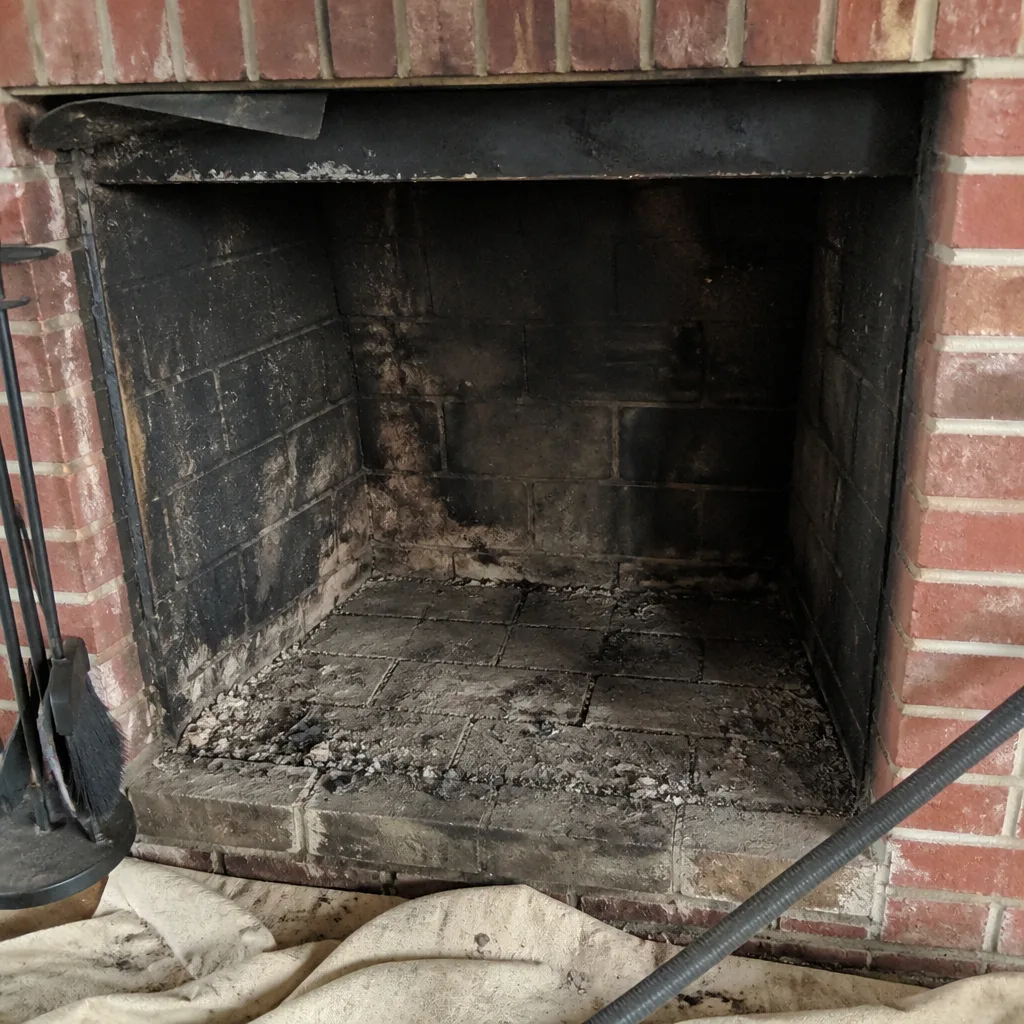 Before
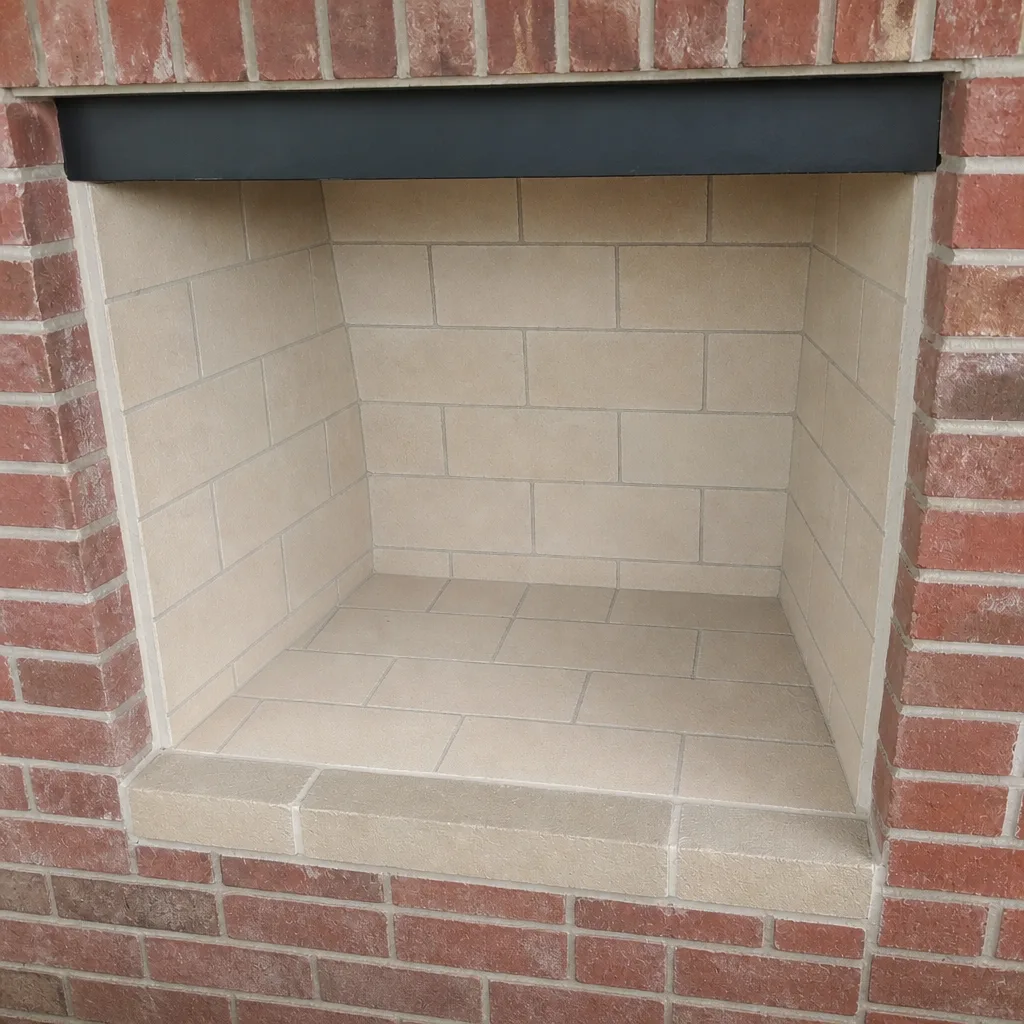 After
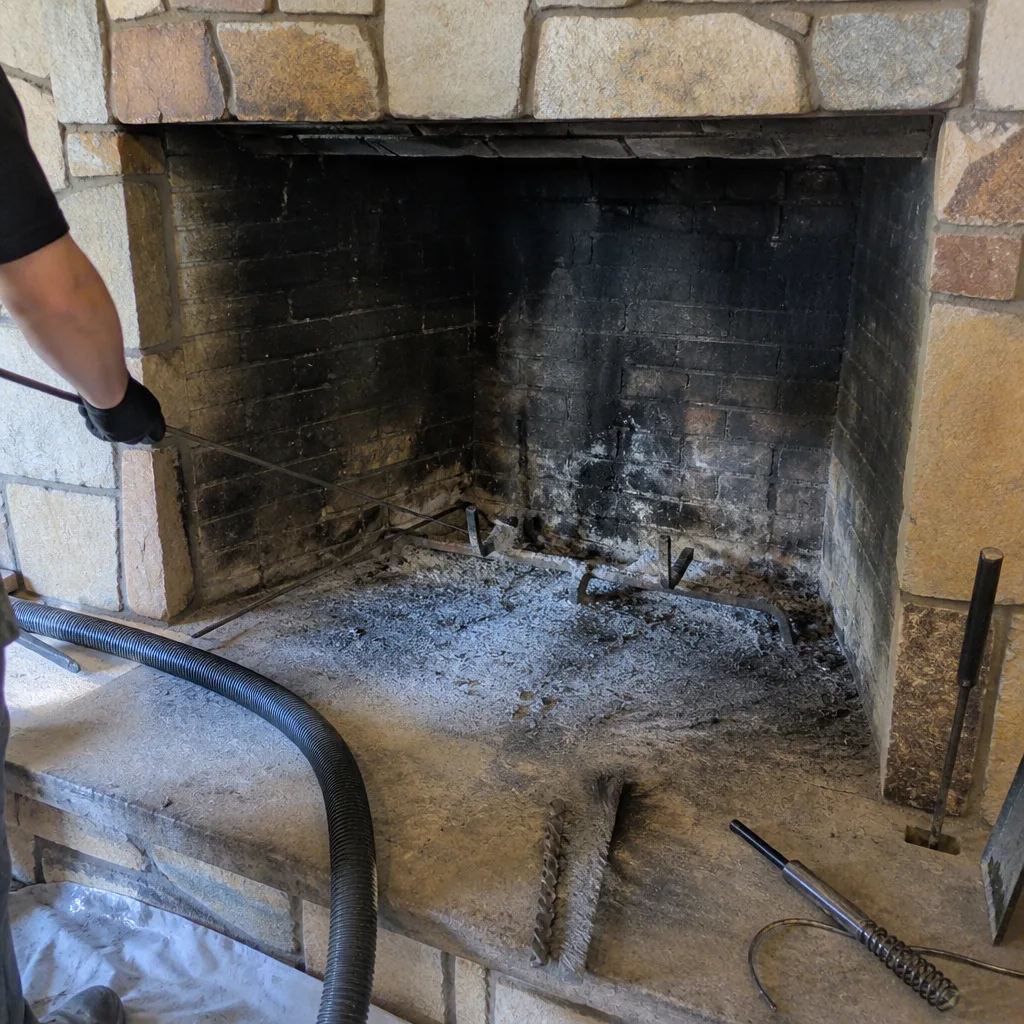 Before
 After
 Before
 After
When to Call a Professional
Some situations need a technician’s visit right away, rather than at the next scheduled appointment. Call a professional if you see smoke rolling back into the room on startup, if you notice a strong, persistent smoky or tar-like odor that doesn’t fade, if you spot cracked or crumbling masonry around the flue or firebox, or if a gas appliance shows sooty deposits, discolored flames, or a pilot that won’t stay lit. If you find glazed creosote when you shine a flashlight up the smoke chamber, that’s a call. So is any cap that has come loose, or any flue with visible damage. A technician with a camera inspection can confirm what’s actually happening and give you a photo report of what he found.
If you’re in Greensboro, Greensboro Chimney Cleaning offers free estimates in Greensboro. Call (888) 366-5537 to schedule an inspection, a sweep, or a repair, and one provider handles all three. We answer 24/7. Fast dispatch from 7am to 7pm, Sunday through Friday.
Frequently Asked Questions
A chimney in Greensboro should be inspected once a year and swept according to usage: roughly every two to three years for light use, annually for one to two cords per season, and with a mid-season check for households burning more than two cords. The right interval depends on your real accumulation rate, which the inspection reveals, so the annual inspection is the constant and the sweep interval is the variable.
An annual inspection is still necessary, but a full sweep may not be. If you burn under a cord a season and the technician finds only light soot, a sweep every two to three years can be enough. The inspection tells you when a sweep is due, which is why skipping the annual inspection is the mistake, not adjusting the sweep interval. Call (888) 366-5537 to schedule an inspection and get an exact read on your system.
Yes. A gas fireplace or gas-fired appliance needs an annual inspection of the burner, vent, and flue. Gas systems produce no creosote but can develop vent blockages, combustion problems, or damaged components that are not visible from the room. That annual check is a safety floor regardless of how often the fireplace is used.
A chimney sweep in Greensboro typically runs in the range of a standard maintenance visit, with the written estimate setting the final price for the job. Inspection and repair are priced per job by the written estimate, and the estimate is free, so call (888) 366-5537 to get an exact quote. Greensboro Chimney Cleaning works with professional-grade brands for any needed liner or repair components.
Skipping maintenance for several years lets creosote accumulate to a level that increases chimney fire risk and can damage the flue over time. Carbon monoxide hazards also go unnoticed in a neglected system, and small mortar or crown problems worsen in the damp Greensboro climate. A late inspection is worthwhile even after a gap, and a technician can tell you what can safely wait and what can’t. Call (888) 366-5537 to schedule one.
You should see the evidence yourself. A professional inspection includes a camera inspection and a photo report, so you can look at the condition of the flue and the masonry before any repair is recommended. If a technician tells you the flue needs relining or a masonry repair, the photos show you why. If work can safely wait, that should be on the report too. Call (888) 366-5537 for an inspection with photo evidence.
The Bottom Line
The annual sweep is a floor, not a schedule. The right interval for your household comes from your real creosote accumulation rate, which the annual inspection and the record you keep over two or three seasons will show you. Light users can stretch the sweep to every two to three years; heavy users need a mid-season visit. Gas systems need an annual check even though they produce no creosote. Any repaired or relined system needs a mid-season check in its first year. The one constant is the annual inspection, done by a professional with a camera and a photo report, and paired with a sweep and repair from the same provider. Our technicians have up to 11 years of experience. For a free estimate in Greensboro, call (888) 366-5537. We answer 24/7. Fast dispatch from 7am to 7pm, Sunday through Friday.
Written by the team at Greensboro Chimney Cleaning.